Deep Dive: Are Microstrategy Memes a Hidden Bottom Indicator For Crypto?

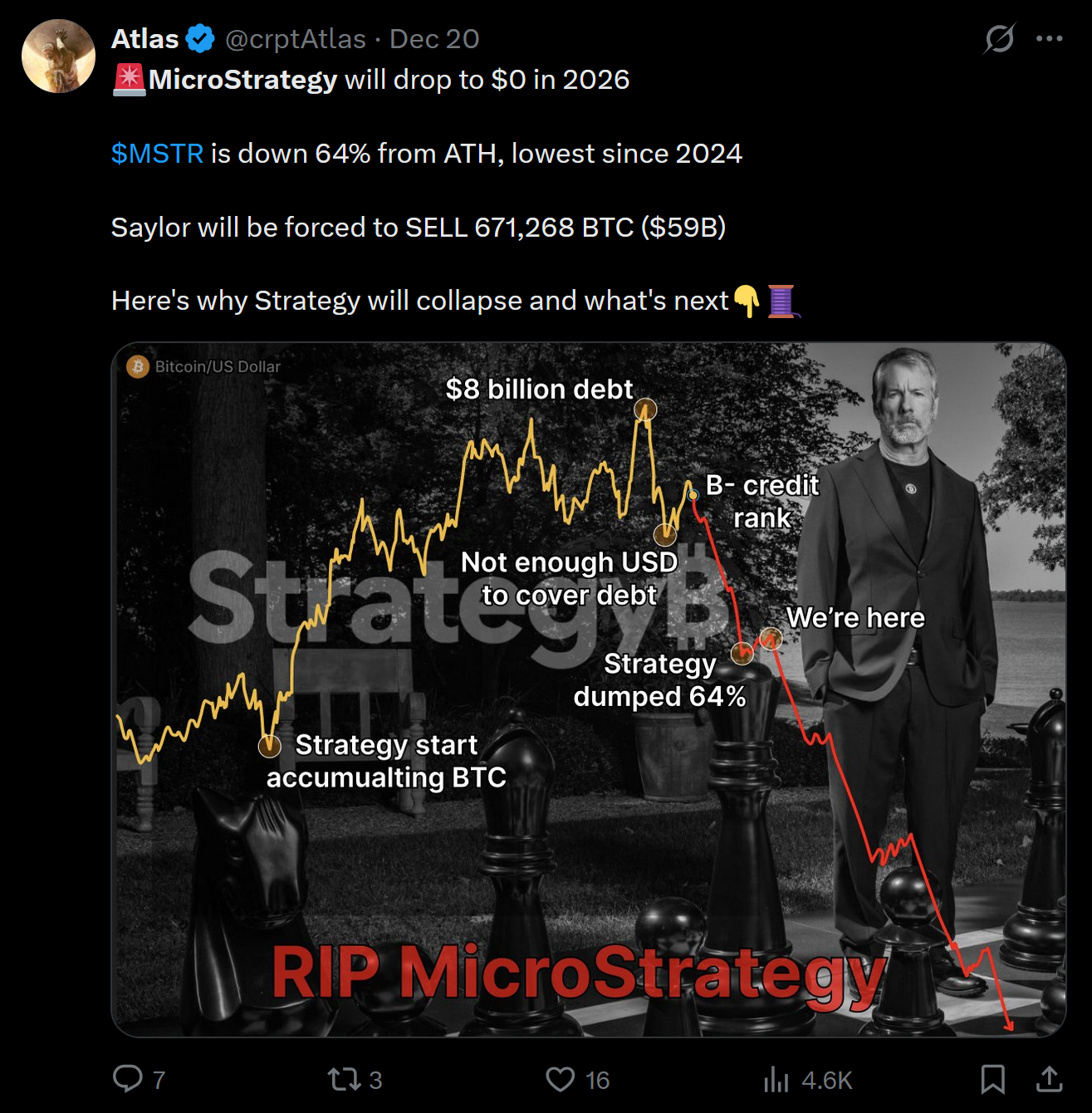
As Bitcoin has "failed to launch" throughout the past couple months, a more and more common discussion topic is Microstrategy, its dwindling stock price, and the threat of Michael Saylor's liquidation of some or all of MSTR's 671,268 Bitcoin ($58.4B), according to its corporate balance sheet.
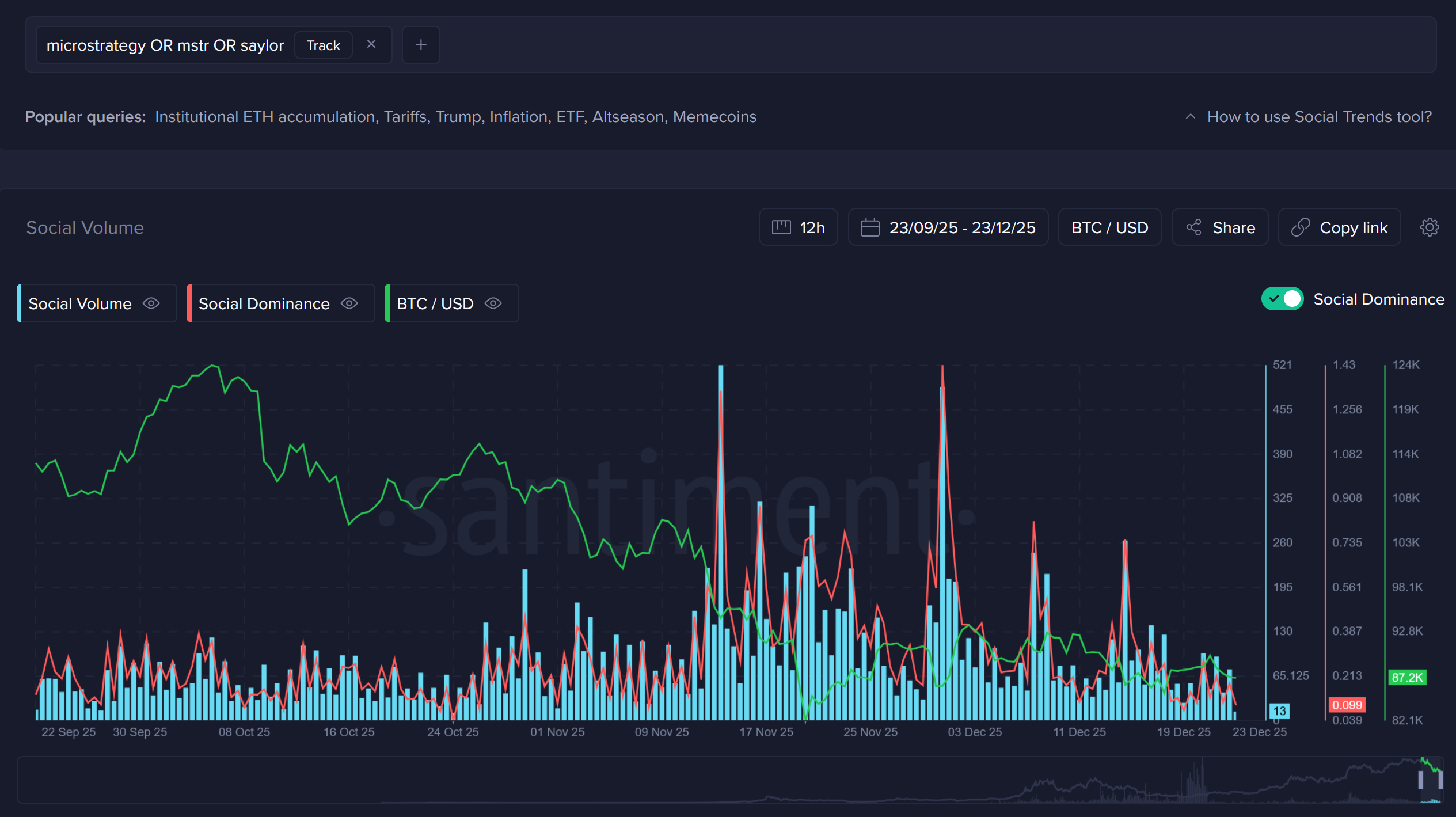
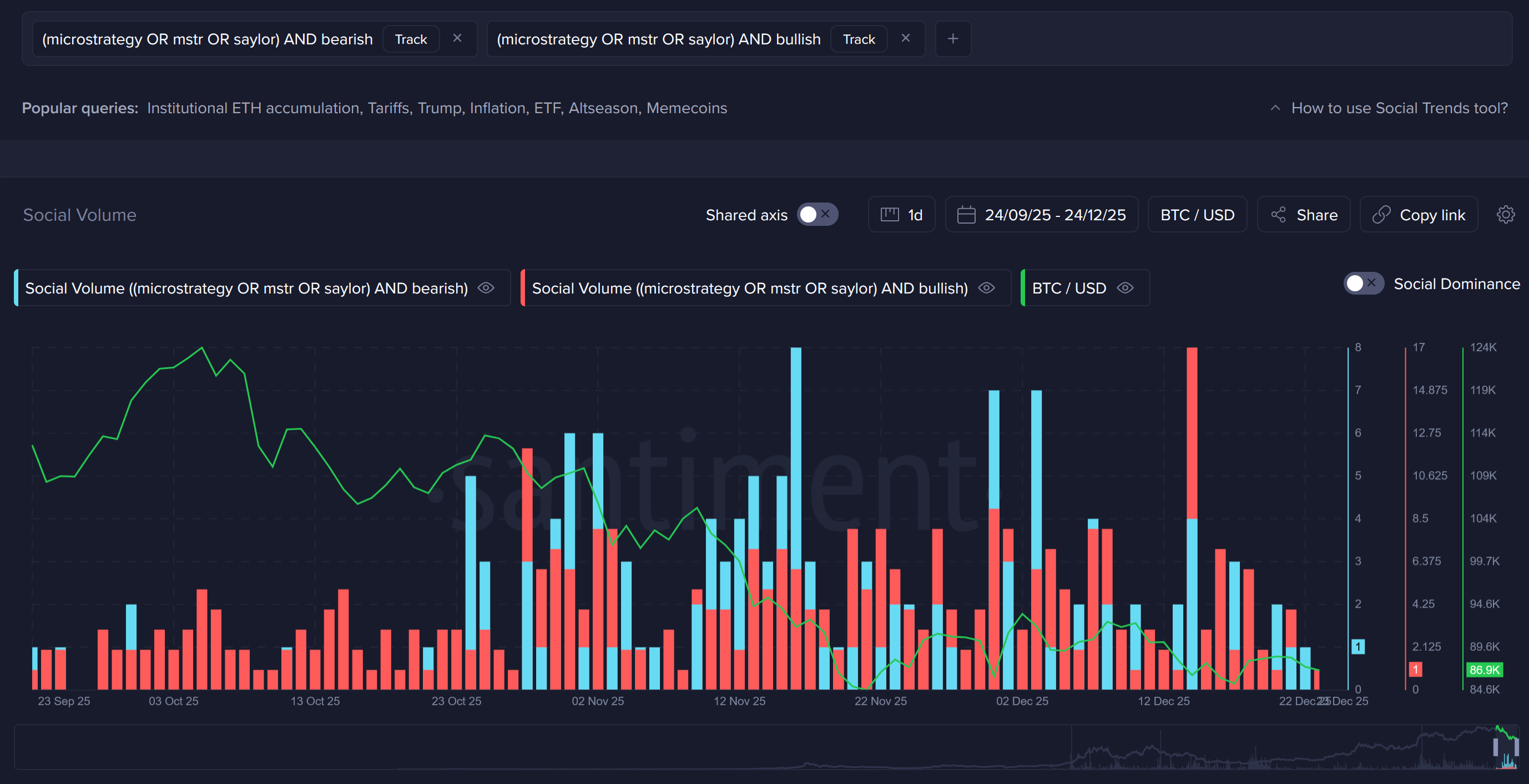
As we can see, the company (and Saylor) began spiking with major levels of conversations across social media in mid-November.
Since its local top on July 16th, Microstrategy (MSTR) stock has plummeted from ~$456 to ~$158 per share.
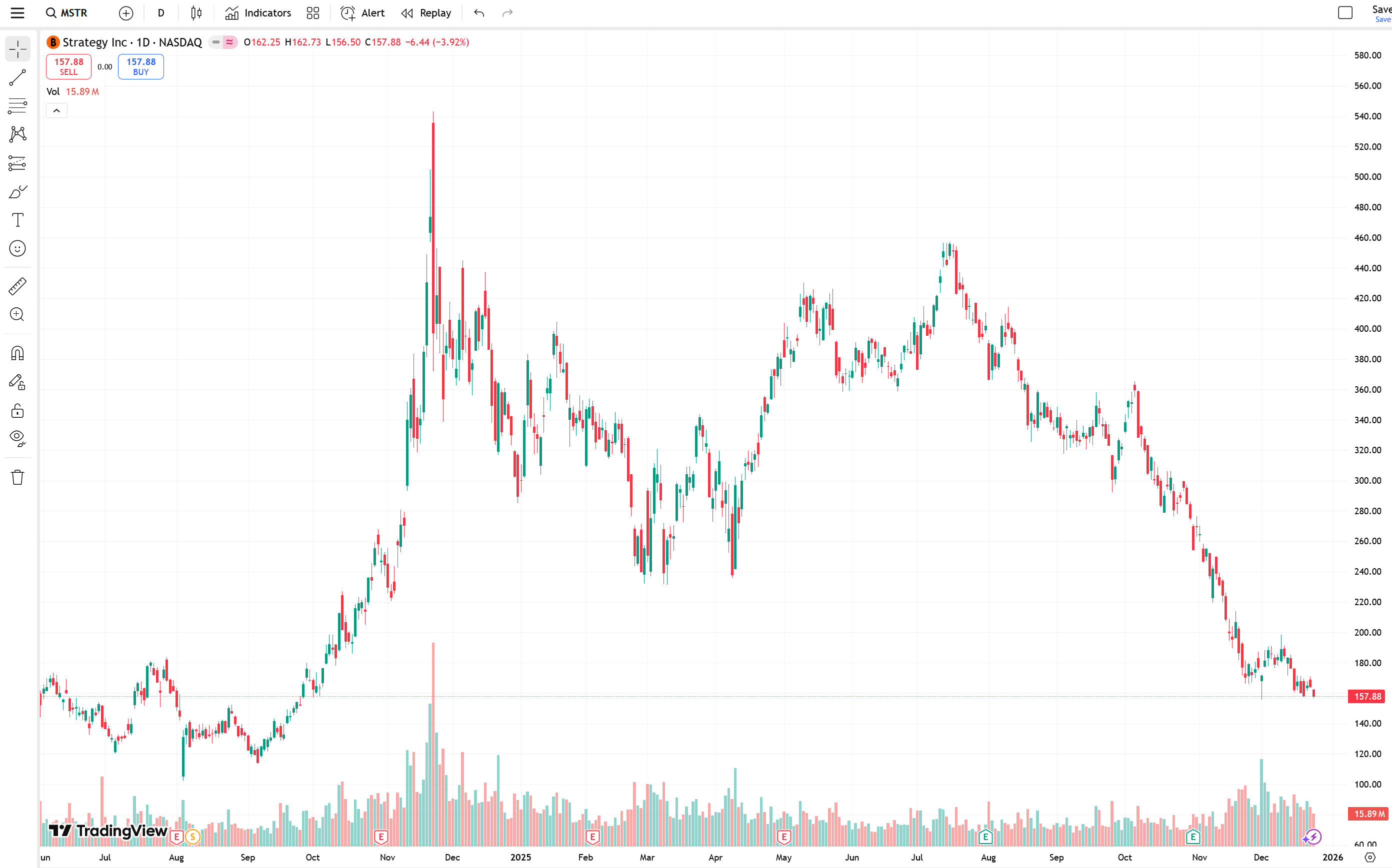
This -65% drop has come with quite a bit of hostility, distraught, and of course memes.
Crypto traders’ concerns about MicroStrategy mostly center on how aggressively the company has borrowed money to buy Bitcoin. Over the years, MicroStrategy issued large amounts of convertible debt and other loans to stack more BTC. While this strategy worked well during bull markets, it makes people nervous during price drops. If Bitcoin falls sharply, critics worry the company could face pressure from debt obligations, higher interest costs, or refinancing risks. On social media, this often gets simplified into fear-driven narratives about “over-leverage,” even if the actual debt terms are long-dated.

Another source of concern comes from how closely MicroStrategy’s identity is tied to Bitcoin itself. Under Michael Saylor, the company has effectively become a Bitcoin proxy rather than a traditional software business. Traders sometimes question whether the core software revenue is strong enough to support the company if Bitcoin enters a long bear market. When BTC volatility increases, posts on X and Reddit often speculate about worst-case scenarios, such as forced selling of Bitcoin or dilution of shareholders, even though these outcomes are not automatic or guaranteed.
There is also confusion and misinformation around liquidation risk. Some traders assume MicroStrategy could face margin calls like a leveraged hedge fund, which fuels panic during downturns. In reality, most of the company’s debt is not tied to daily margin requirements, but social media tends to compress complex financial details into dramatic headlines. This mix of high leverage, Bitcoin price swings, and Saylor’s very public, all-in messaging creates anxiety online, especially among traders who focus on short-term price moves rather than long-term balance sheet structure.
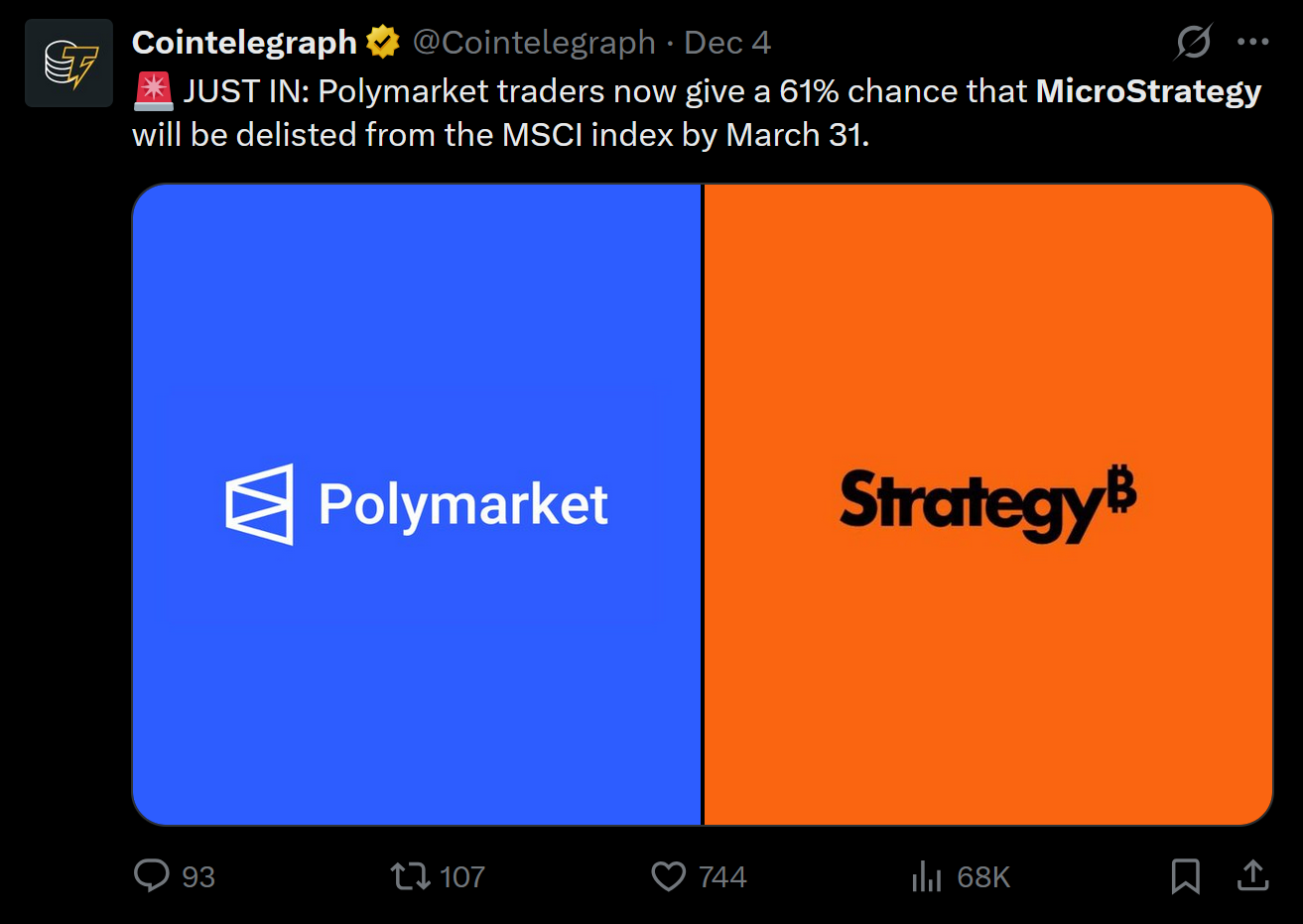
It was less than three weeks ago when Polymarket showed that 61% of traders believed that MicroStrategy would be de-listed by March 31st from the MSCI index.
Some people root for Michael Saylor to fail because he represents an extreme, all-in approach to Bitcoin. Saylor speaks with total confidence, often saying Bitcoin will keep rising forever and that there is no safer asset. For critics, this certainty feels arrogant or unrealistic. When someone is very loud, successful, and sure of themselves, it can create resentment. On social media, that resentment often turns into people hoping to see him proven wrong during market downturns.
Others are motivated by financial incentives or past losses. Traders who are shorting MicroStrategy stock, or who sold Bitcoin too early, may benefit emotionally or financially if Saylor struggles. If MicroStrategy’s strategy were to fail, it would confirm their belief that heavy Bitcoin exposure is reckless. In crypto culture, being “right” matters a lot, and seeing a high-profile figure stumble can feel like validation for those who took a different path. There were even KOL's like @beaniemaxi on X who were calling this over a year ago.
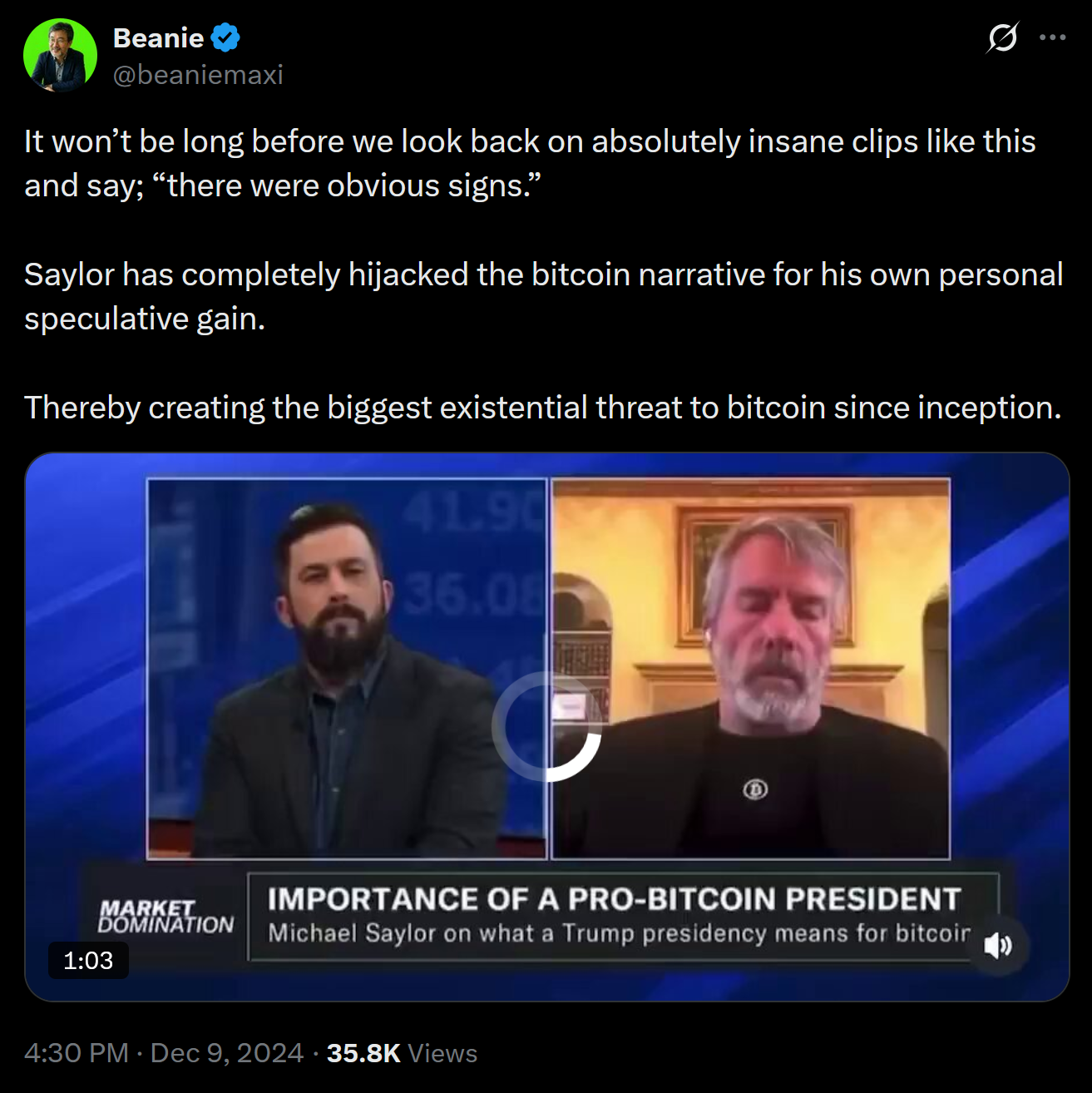
There is also a growing distrust of powerful figures in crypto and finance, particularly during this two and a half month downswing. Some people worry that Saylor’s influence encourages others to take risks they don’t fully understand. They fear new investors might copy his strategy without the same resources or time horizon. Because of that, critics sometimes frame his downfall as a “lesson” for the market. Online, this turns into harsh commentary, not always because people want harm, but because they want a warning story to replace what they see as dangerous optimism.
Heavy bearishness toward MicroStrategy and Michael Saylor is arguably a stealth bottom signal because it shows emotions have reached an extreme level of FUD. When retail traders flood social media with fear about leverage, bankruptcy rumors, or forced Bitcoin selling, it often means frustration has peaked. At this point, many traders are no longer reacting to new facts but are simply tired of volatility and losses. Historically, markets tend to turn when fear becomes widespread and one-sided.
This kind of FUD often appears after long periods of price pressure, when weaker hands have already sold. When almost everyone agrees that a company or strategy is “doomed,” there are fewer sellers left. For MicroStrategy, this usually means most traders who were scared of Saylor’s Bitcoin-heavy approach have already exited. Once selling pressure fades, prices can stabilize even if the news stays negative, which is a classic sign of a potential bottom forming. Notice how traders were getting more bearish toward Microstrategy and Saylor when Bitcoin was free-falling in the first half of November, but they have become much more neutral or even slightly bullish toward him ever since.
Another reason this can be bullish is that extreme negativity lowers expectations. When sentiment toward Michael Saylor is very poor, even neutral or slightly positive developments can surprise the market. A Bitcoin bounce, a calm earnings report, or simply “nothing going wrong” can shift the narrative quickly. While fear alone does not guarantee a reversal, history shows that when retail traders have fully given up and sentiment is deeply negative, the downside risk is often smaller than most people expect.
-----
Free two-week trials to Sanbase PRO (to access all mentioned Santiment data in this article, and plenty more) are AVAILABLE HERE!
-----
Disclaimer: The opinions expressed in the post are for general informational purposes only and are not intended to provide specific advice or recommendations for any individual or on any specific security or investment product.