
This Week in Crypto, Full Written Summary: W2 March 2026

Executive Summary
- Decoupling Event: Bitcoin is showing rare strength against the S&P 500, breaking typical correlations during the current geopolitical conflict.
- Whale Accumulation: Key stakeholders (10-10k BTC wallets) are now accumulating, while retail traders continue to "buy the dip," creating a complex market dynamic.
- Long-Term Opportunity: MVRV data suggests that long-term holders are in the red, historically indicating a safer entry point for patient investors compared to short-term trading.
Is the Bottom In?
Why War Tensions Haven't Stopped Crypto's Recovery
The Santiment team sat down with Equities Tracker to discuss a surprising market trend: despite escalating global conflict involving major powers, crypto markets are showing resilience. While equities stumble, Bitcoin is carving its own path. Here is what the on-chain data says about the current state of the market.
00:00 - Crypto's Surprising Resilience to Global War Tensions
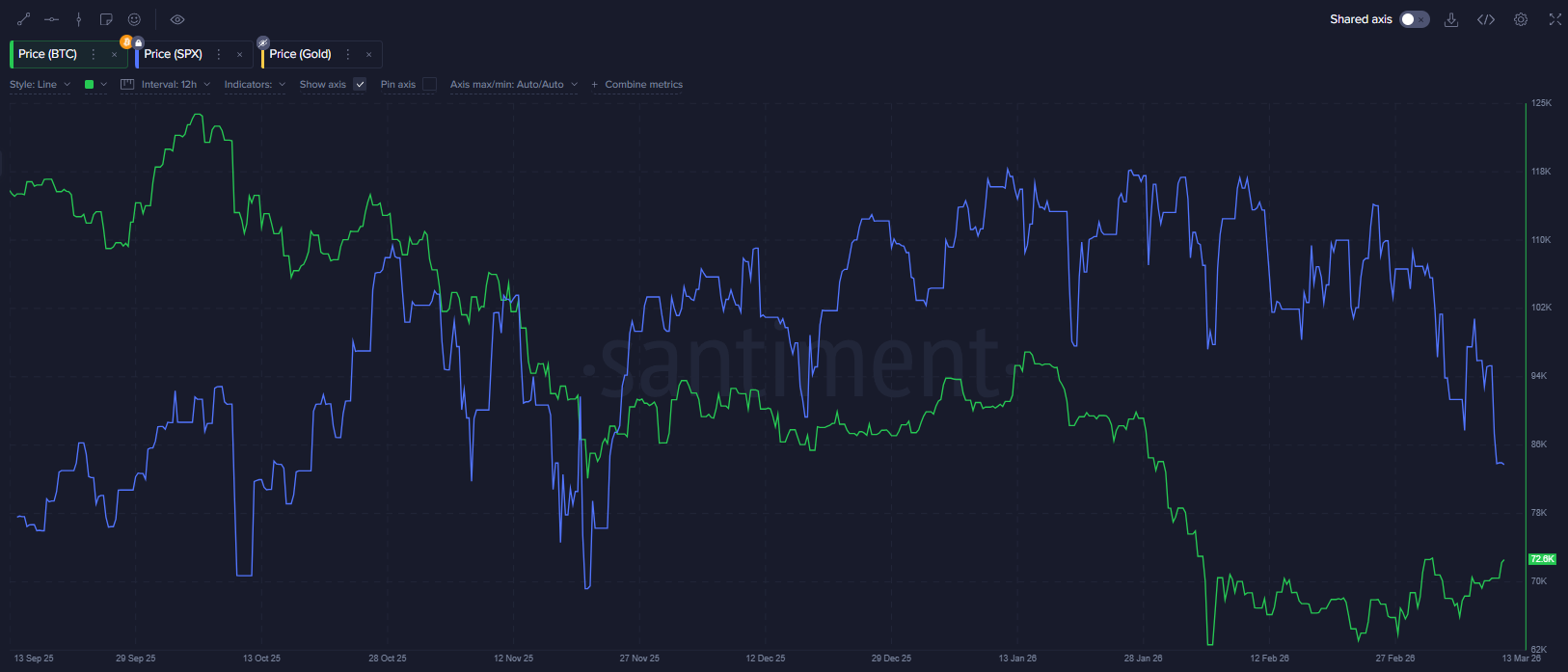
The past few weeks have been volatile, yet Bitcoin has managed a mild recovery. Despite the severity of the conflict involving the US, Israel, and Iran, crypto assets are performing better than traditional equities. The S&P 500 has dropped since the October highs, while Bitcoin and Gold are seeing upticks.
- Key Data: S&P 500 is down ~2.2% over five weeks; Bitcoin is up 2.4%; Gold is up 3.7%.
- Actionable Tip: Monitor Gold and Bitcoin in tandem; a simultaneous rise often signals a flight to alternative stores of value.
02:16 - The Decoupling: Bitcoin vs. S&P 500 Performance
We are witnessing a break of BTC’s correlation with the S&P index. Bitcoin typically follows the S&P 500. However, recent geopolitical instability has caused equities to falter due to economic fears including inflation and more paranoia about over-investment into AI. Bitcoin, not being tied to a single country's economy, is experiencing some uncorrelated price discovery.
- Key Data: Bitcoin historically dropped 38-43% post-ATH, but recently gained 2.4% while the S&P slipped (chart).
- Actionable Tip: When correlations break during a crisis, treat crypto as a non-sovereign hedge rather than a tech stock proxy.
03:54 - Why Geopolitics Break Traditional Market Correlations
Major events, like the FTX collapse or the current war, tend to shatter correlations. During calm periods, the S&P and BTC move together. During chaos, they split. This happens because the markets have different stakeholders and the investment cases for risk assets and BTC are slightly different.
- Key Data: Correlation tightens during stability; divergence spikes during "black swan" or major geopolitical events.
- Actionable Tip: Watch for "decoupling" events as potential precursors to independent crypto rallies.
06:22 - Altcoin Performance: Winners and Losers This Week
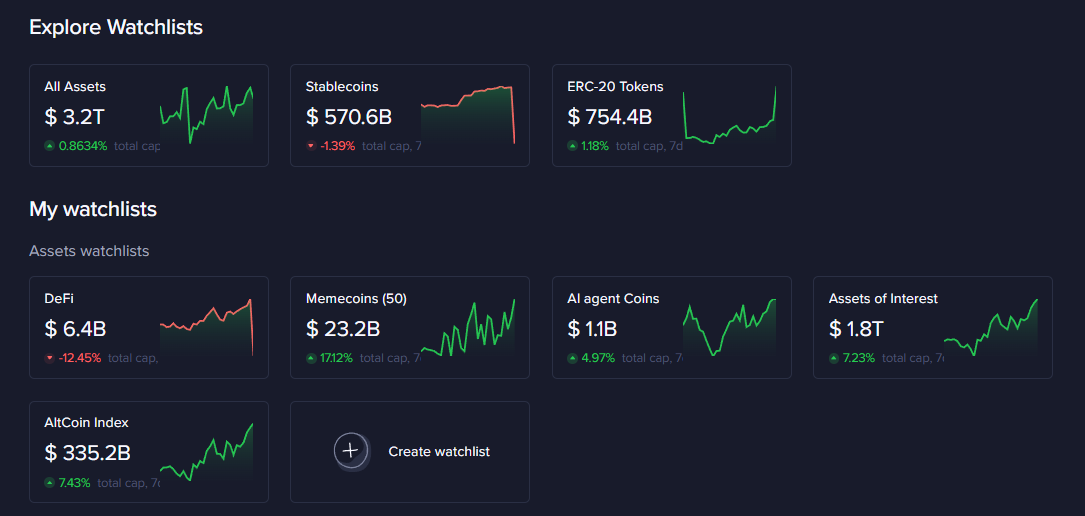
The recovery isn't uniform. While Bitcoin is up, altcoins are a mixed bag. Memecoins have surprisingly outperformed, while sectors like DeFi and Real World Assets (RWAs) have taken a hit. Privacy coins and AI agents have also seen declines, showing that liquidity isn't lifting all boats equally.
- Key Data: Dogecoin +3.5%; Ethereum +2.5%; Zcash and Toncoin saw notable declines (tool).
- Actionable Tip: Don't assume an "Altseason" is automatic just because BTC is up; be selective with sectors showing relative strength.
09:44 - Is Bitcoin Bottoming Out? Analyzing Whale Behavior
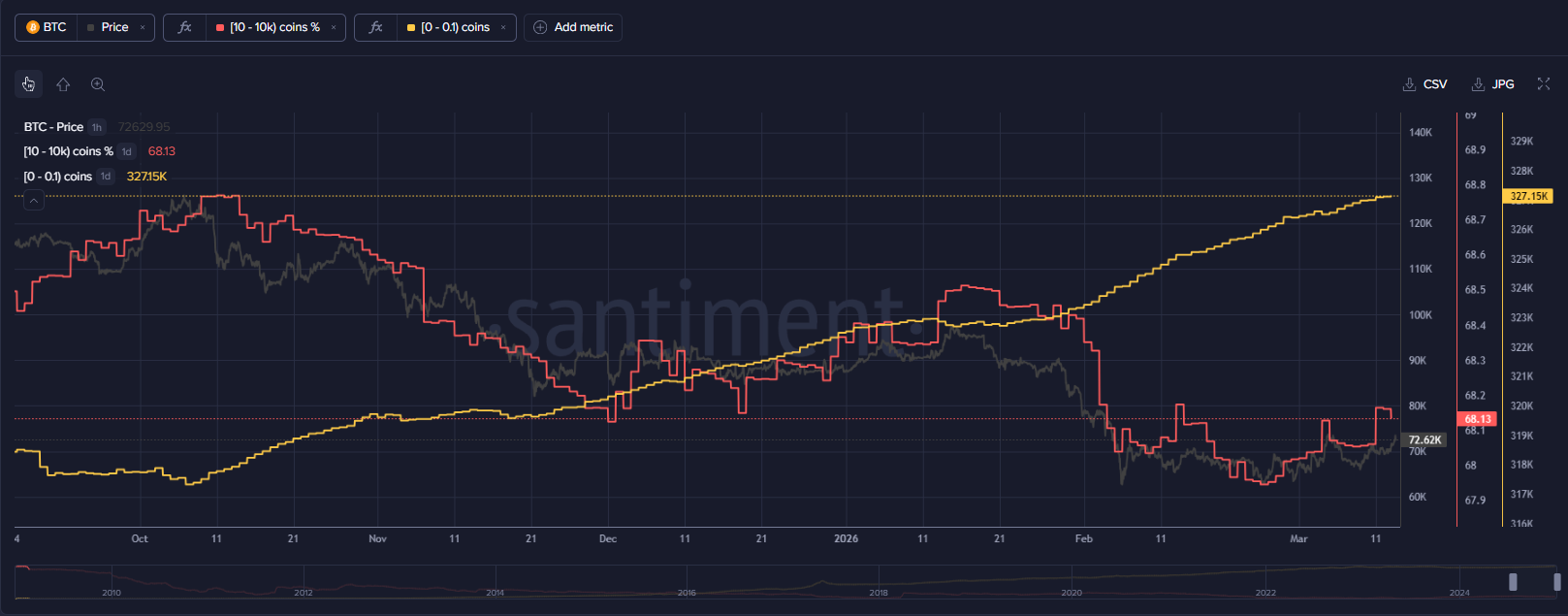
Determining a market bottom is the trillion-dollar task. Currently, wallets holding 10 to 10k BTC have started accumulating again after dumping since mid-January. This is a positive reversal. However, retail traders are still aggressively buying dips, which is often a counter-indicator for the case of a definitive bottom.
- Key Data: Key Stakeholders (10-10k BTC) shifted from dumping to accumulating two weeks ago.
- Actionable Tip: Look for whale accumulation paired with retail capitulation (panic selling) for the highest probability buy signals.
12:27 - 10k-10k BTC Wallets: The Accumulation Signal
The green line on Santiment's charts represents wallets holding between 10 and 10,000 BTC. These entities control over two-thirds of the supply. Their recent shift to accumulation is a bullish signal. Ideally, we want to see small wallets (retail) drop while this group rises, signaling a transfer of coins from weak hands to strong hands.
- Key Data: 10-10k BTC wallets control >66% of total supply and are net accumulating again (chart).
- Actionable Tip: Use the "Holder Distribution" metric to track if smart money is buying what retail is selling.
14:12 - Retail vs. Whales: The Battle for Market Direction
Retail traders refuse to give up. Despite the war and regulatory fears (like Supreme Court rulings on tariffs), retail keeps buying. Historically, markets tend to bottom when the "crowd" loses hope. The persistence of retail optimism is currently the biggest argument against a confirmed bottom.
- Key Data: Retail holdings remain near highs, unlike late August when retail dumping preceded an ATH.
- Actionable Tip: Be cautious when the "crowd" is euphoric or aggressively buying dips; markets rarely reward the majority consensus immediately.
16:13 - Sentiment Analysis: Why Are Traders So Bullish?
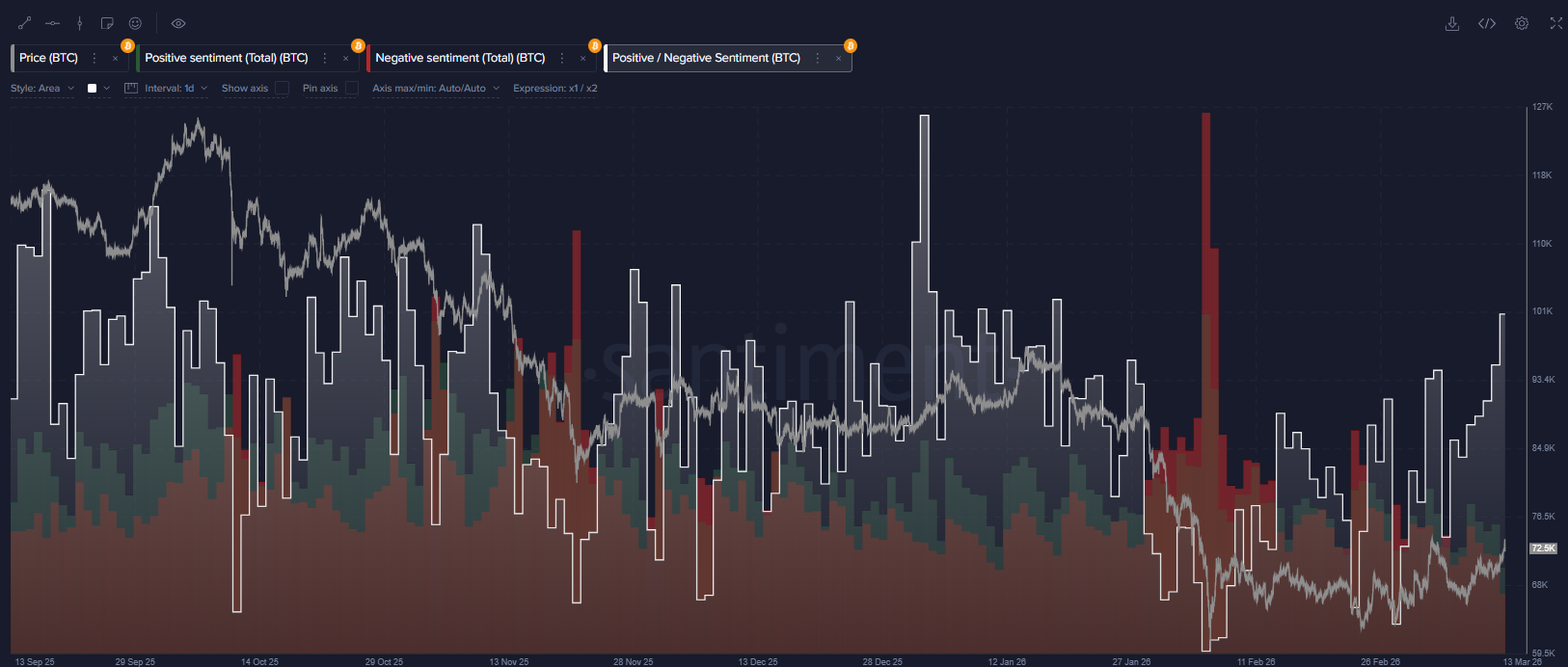
Social volume indicates a surge in positive commentary. The ratio of positive to negative comments is overwhelmingly bullish—the highest in six weeks. While this reflects confidence, extreme bullishness often precedes a "bull trap" or local top. Uncertainty regarding the war seems to be fueling a paradoxical confidence in crypto.
- Key Data: Positive comments are currently double the negative comments, a 2:1 ratio(chart).
- Actionable Tip: When social sentiment hits extreme highs, consider taking profits or tightening stop-losses rather than FOMOing in.
21:00 - On-Chain Activity: Network Growth vs. Holder Count
Network growth (new addresses) and transaction volume are trending down, which is usually bearish. However, the total amount of non-zero wallets is at an all-time high of nearly 59 million. This suggests that while daily utility is low, long-term adoption and holding behavior remain intact.
- Key Data: 58.59 million non-zero BTC wallets (chart).
- Actionable Tip: Distinguish between trading activity (low) and holder retention (high) to gauge long-term network health.
24:43 - Why We Ignore Mid-Tier Wallets (10k-100k BTC)
Santiment focuses heavily on the 10-10k BTC tier. Wallets holding 10k to 100k BTC show almost no correlation with price action. These are typically exchange cold wallets or liquidity providers that move based on operational needs rather than market sentiment.
- Key Data: There are only ~84 wallets holding between 10k-100k BTC.
- Actionable Tip: Filter out exchange wallets when analyzing whale behavior to avoid "false alarm" transaction signals.
27:04 - MVRV Analysis: Long-Term Buying Opportunities
Market Value to Realized Value (MVRV) shows a split. Short-term traders (30-day) are slightly in profit, indicating some risk of a sell-off. However, long-term holders (365-day) are down significantly (-25%). Historically, buying when long-term holders are underwater offers a better risk-to-reward ratio than buying when they are in profit.
- Key Data: 30-day MVRV: +4.7% (Risk); 365-day MVRV: -25% (chart).
- Actionable Tip: Long-term investors often look for negative yearly MVRV values to enter positions during periods of holder "pain."
30:20 - Whale Dormancy and the "Wait and See" Approach
Whale activity has plummeted to levels not seen since late 2024. This isn't necessarily bearish; it indicates a "wait and see" approach due to geopolitical uncertainty. They aren't selling, but they aren't moving coins either. Historically, low activity periods often precede major volatility spikes once the direction is more obvious to the market.
- Key Data: March 7th saw a ~1.5 year low in $1M+ transactions (data).
- Actionable Tip: Low volatility and low whale activity often signal the "calm before the storm"—prepare for a major move in either direction.
35:19 - Short Squeezes and Funding Rate Implications
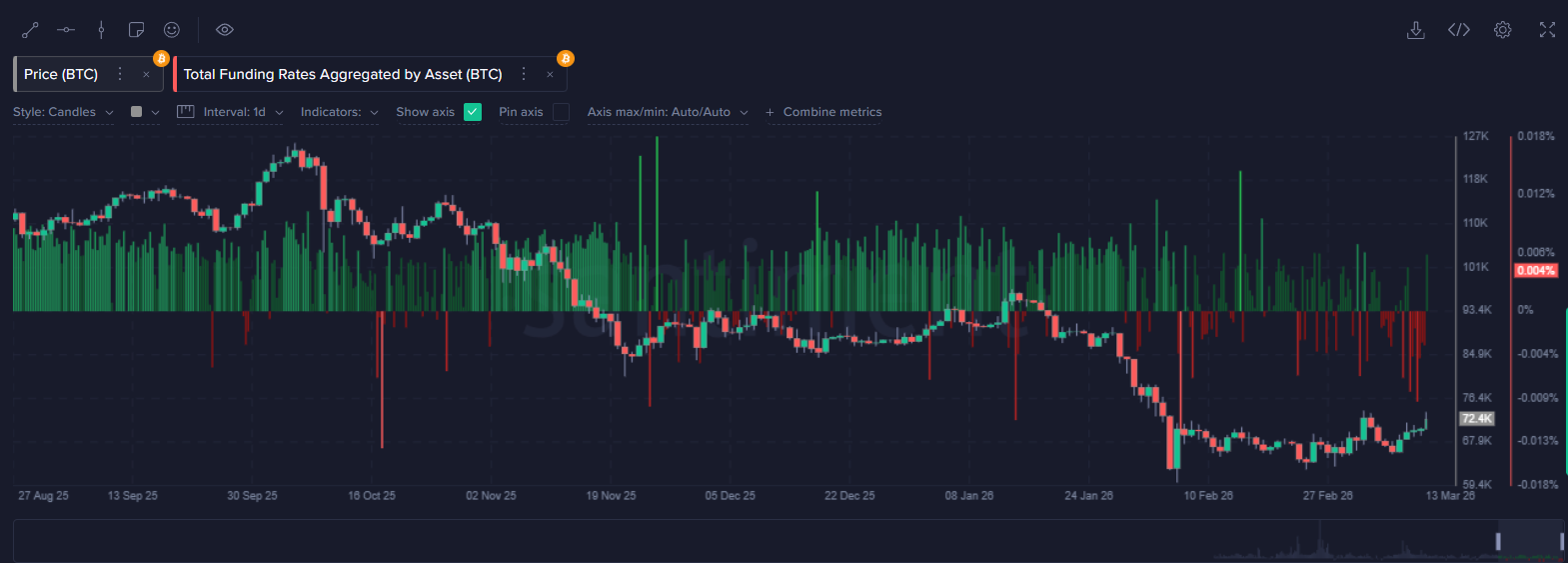
Despite the price recovery, funding rates remain negative on many exchanges. Traders are paying premiums to short Bitcoin. This accumulation of short positions increases the probability of a "short squeeze," where a price rise forces liquidations that fuel further price increases.
- Key Data: Aggregated funding rates are negative, indicating a dominance of short sellers(chart).
- Actionable Tip: Negative funding rates during a price consolidation can be a bullish signal for a potential squeeze upward.
37:50 - Ethereum's Stagnation and Long-Term Outlook
Ethereum is mirroring Bitcoin but with less momentum. Funding rates on ETH have just flipped slightly positive, which is less ideal than BTC's negative rates. However, long-term MVRV for ETH is also deep in the negative (-30%), suggesting it shares the same long-term value proposition as Bitcoin right now.
- Key Data: ETH 365-day MVRV is -30%(chart).
- Actionable Tip: Watch for ETH social dominance spikes; if the crowd ignores ETH, it may silently bottom out alongside BTC.
Conclusion
On one hand, whale accumulation and negative MVRV suggest a strong long-term buying zone. on the other, retail FOMO and geopolitical uncertainty create short-term risks. The market is waiting for a decisive move, and smart money is watching the charts, not the headlines.
Spotting, analyzing, and understanding the markets is easier with the right tools and a strong like-minded community. Sign up for app.santiment.net and join our discord for access to real time metrics and analysis. For more data-driven crypto analysis, subscribe to our YouTube channel, our Substack, or follow us on Santiment Insights.
Disclaimer: The opinions expressed in the post are for general informational purposes only and are not intended to provide specific advice or recommendations for any individual or on any specific security or investment product.