Bitcoin's Upside Remains, But Best to Take a Long-Term Approach

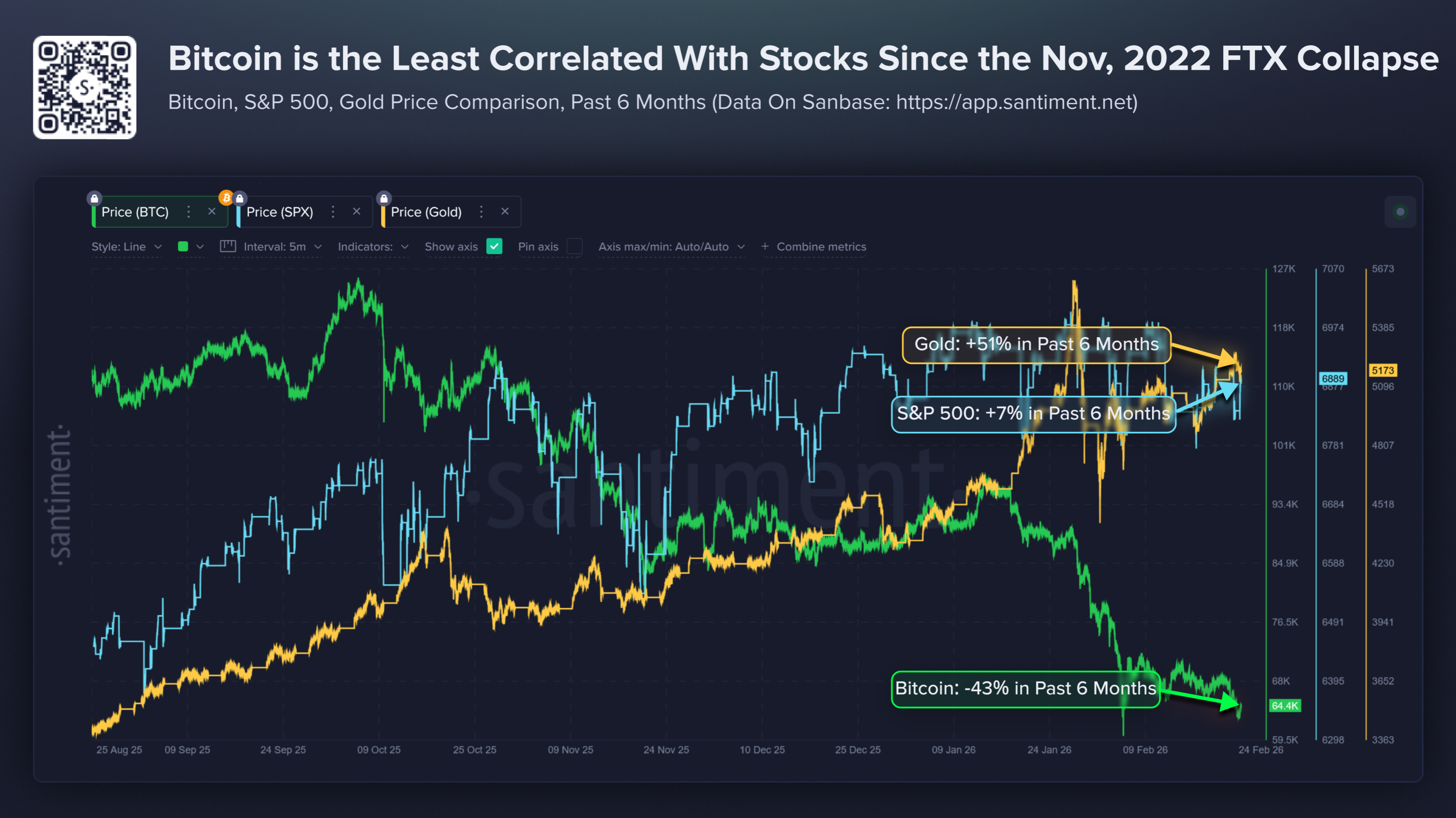
📊 For years, Bitcoin has often moved in the same direction as the stock market, particularly the S&P 500. When stocks climbed during periods of low interest rates and strong economic growth (2021 & 2024, for example), Bitcoin and many altcoins flourished. When stocks fell during times of fear, like during aggressive Federal Reserve rate hikes, crypto usually dropped too (such as 2018 & 2022).
📉 In November, 2022, rising interest rates and the collapse of FTX pushed Bitcoin down to $15.7K. That period marked one of the strongest examples of crypto collapsing in magnitudes far higher than equities.
🤯 But as this chart shows, the past six months have shown a sustained period of this correlation break. Since late August, gold has surged +51%, the S&P 500 has gained +7%, and Bitcoin has fallen -43%. This is the weakest correlation between Bitcoin and stocks since the chaos of late 2022. Instead of moving alongside equities, Bitcoin has sharply underperformed while traditional markets have remained stable and gold has thrived.
📈 Historically, when an asset that is usually correlated breaks away in this dramatic fashion, it typically does not stay disconnected forever. Markets tend to rotate, and capital flows shift as sentiment and macro conditions change. In the long term, this unusual separation actually argues for significant upside for Bitcoin and altcoins. If $BTC returns to its historical pattern of tracking equities during economic expansions (with 3 interest rate cuts in the 2nd half of 2025), it may have significant room to catch up.