Deep Dive: How 'Ceasefires' Have Driven April's Crypto Rally

Donald Trump’s ceasefire push has become one of the clearest market-moving stories of the past month, because investors have treated every hint of de-escalation in the U.S.-Iran-Israel war as a signal that the worst economic risks may be fading. Since the war has been the primary attributed reason for cryptocurrency markets staying low (whether completely true or not), this means that any rumor that the conflict is easing is met with immediate "buy the rumor" price action.
The conflict in the Middle East has going on for quite some time, but the current iteration (that most consider a full-blown war) began on February 28th with a joint U.S.-Israeli attack and then helped drive a severe Strait of Hormuz disruption, sent oil sharply higher and rattled global risk assets. But by mid-April, even before a final settlement existed, traders were already buying the possibility that diplomacy could keep energy shocks from spiraling further and could restore a more normal backdrop for equities and crypto.
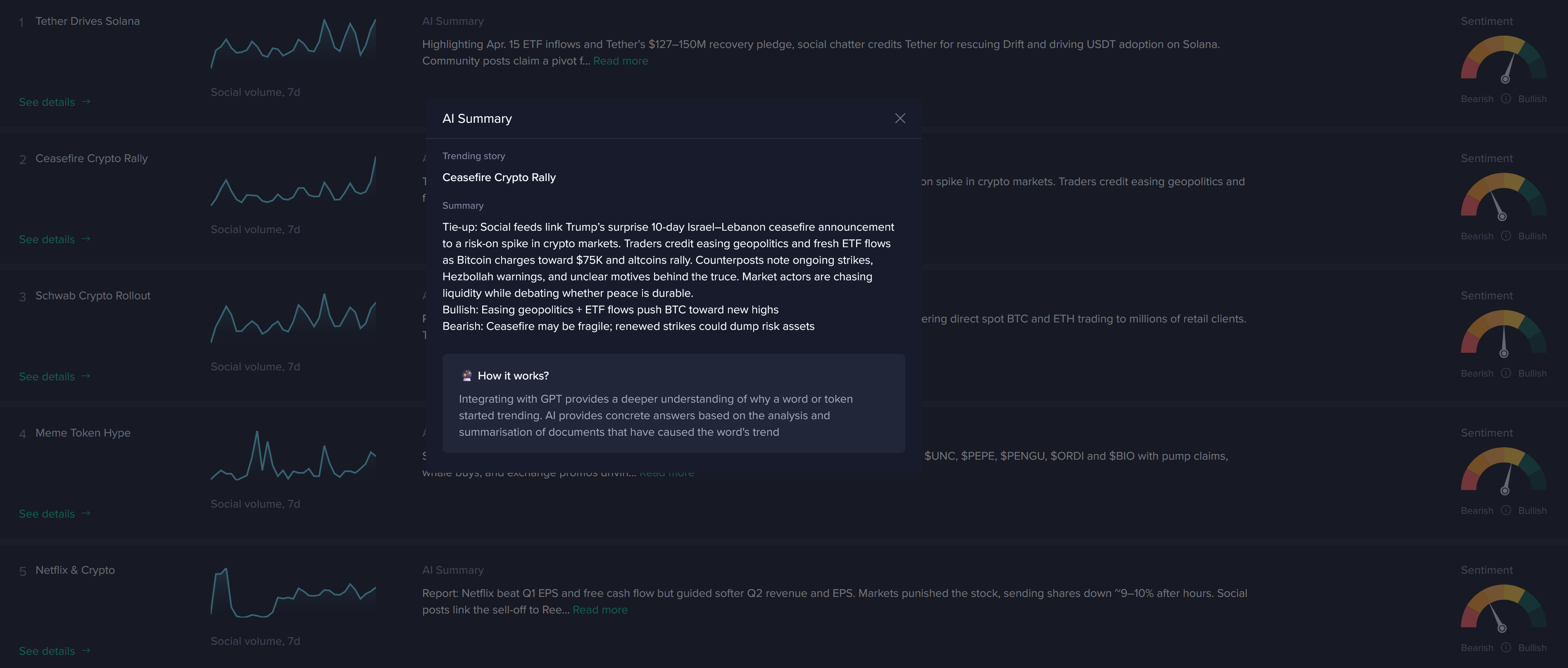
According to our Top Trending Stories, 'Ceasefire Crypto Rally' is currently the 2nd leading topic in cryptocurrency talks. If you've been following the war closely, you may be used to the cycle of the war "almost being over", followed by a major escalation to bring FUD right back. What has made the market reaction so powerful was not a clean, steady march toward peace, but the opposite: a cycle of rumor, relief, disappointment, and then renewed optimism. This week has been a significant step in the right direction, in most peoples' eyes. On April 13th, it was reported that high-level U.S.-Iran talks in Islamabad ended without a breakthrough, even though both sides left the door open to more dialogue.
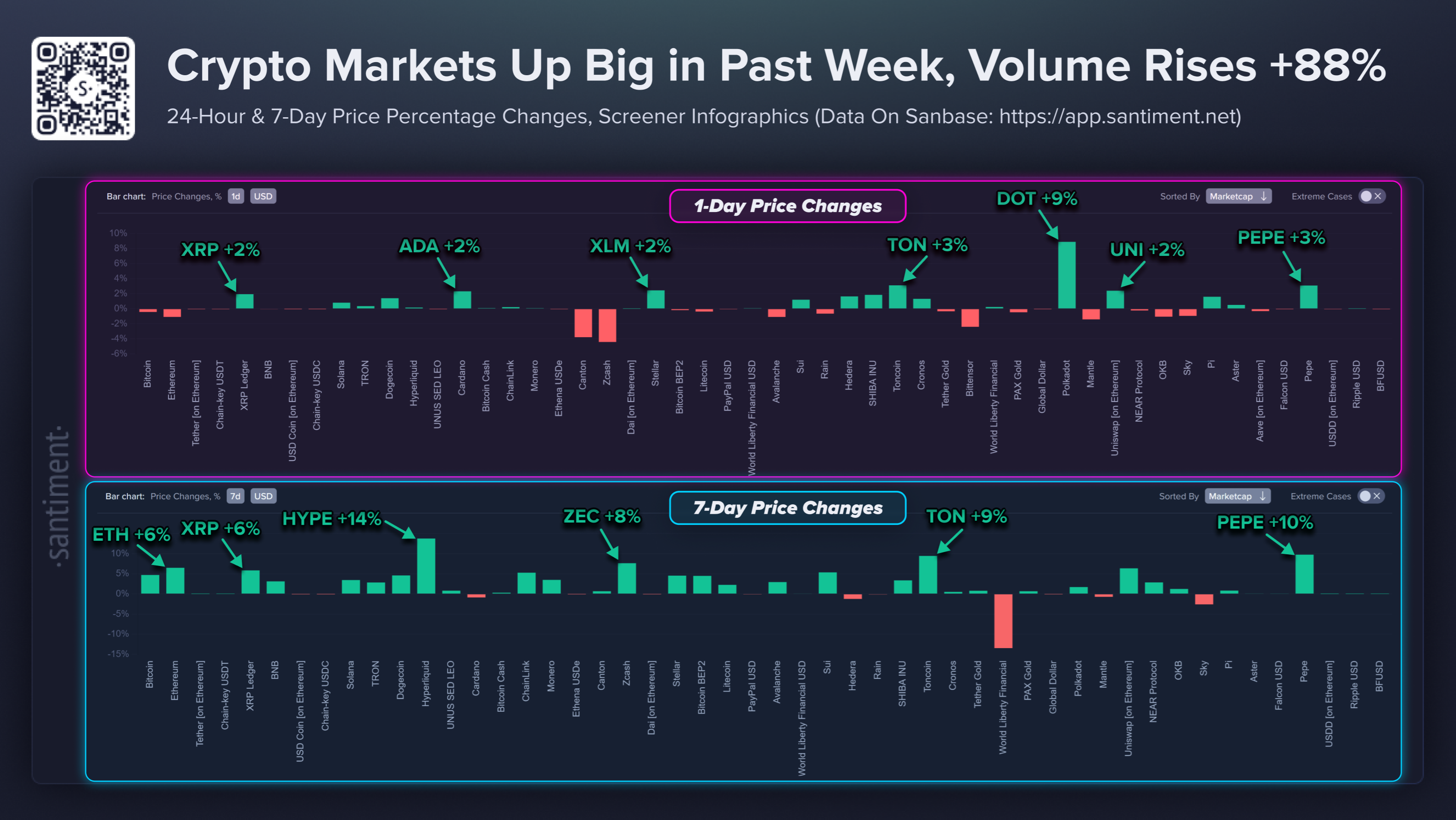
But as was the case during previous "ceasefire" reports, mistrust and disagreements over sanctions relief, nuclear guarantees, and regional security dragged the negotiations back down. In other words, the “talks broke down” narrative was real, but so was the fact that neither side fully walked away, which kept traders primed for the next ceasefire headline. And as we can see based on the recent sea of green, crypto markets have been rebounding swiftly. Hyperliquid, ZCash, Toncoin, Pepe, Ethereum, and XRP are some of the many assets that have shown strong relief rallies over the past week.
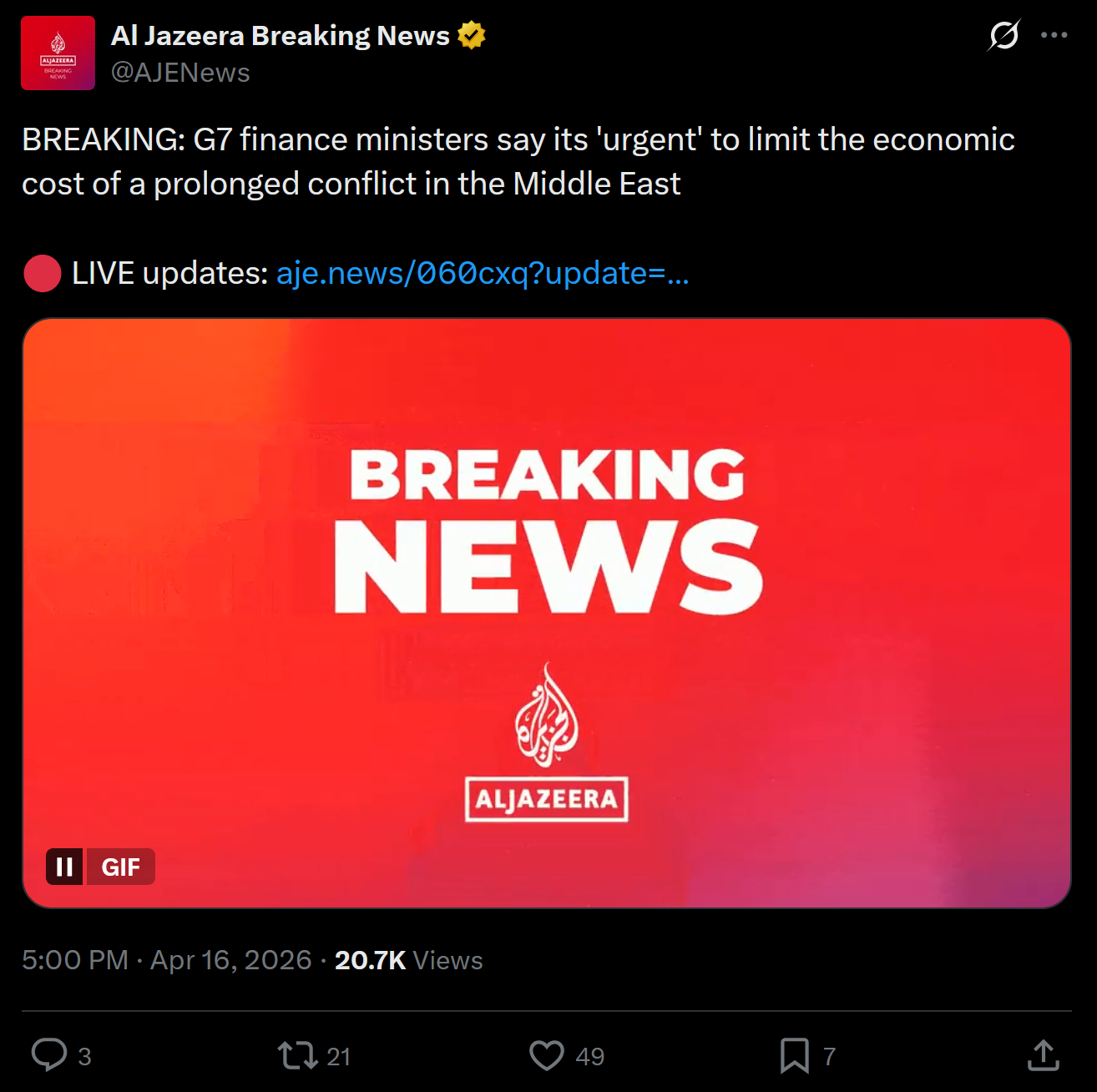
Just yesterday, the ceasefire story has gained more international weight than we've arguably witnessed since the beginning of this conflict. Finance ministers from countries including the U.K., Australia, Japan, Sweden, Spain, and others publicly called for the full implementation of a ceasefire, warning that renewed fighting or fresh Strait of Hormuz disruptions could keep damaging growth, inflation, and financial markets. That kind of coordinated message did not itself end the war, but it reinforced the idea that the global policy establishment now saw de-escalation as economically urgent, not merely diplomatically desirable. For equity investors, that helped support the view that a rebound in the S&P 500 could continue if the conflict stopped getting worse.
The biggest burst of optimism arrived Thursday. Trump has officially announced a 10-day ceasefire between Israel and Lebanon, while separately saying Iran might meet the U.S. over the weekend and that Tehran had proposed a 20-year halt on nuclear weapons development. Reuters also noted that the ceasefire was fragile almost immediately, with Lebanon accusing Israel of violations and Israel pointing to Hezbollah activity. Even so, the market heard the bigger message first: Trump was publicly signaling that the war could be moving from pure military escalation toward a diplomatic endgame. Yes, there is a feeling of distrust around these announcements at this point, since the world has been "teased" for six weeks now.
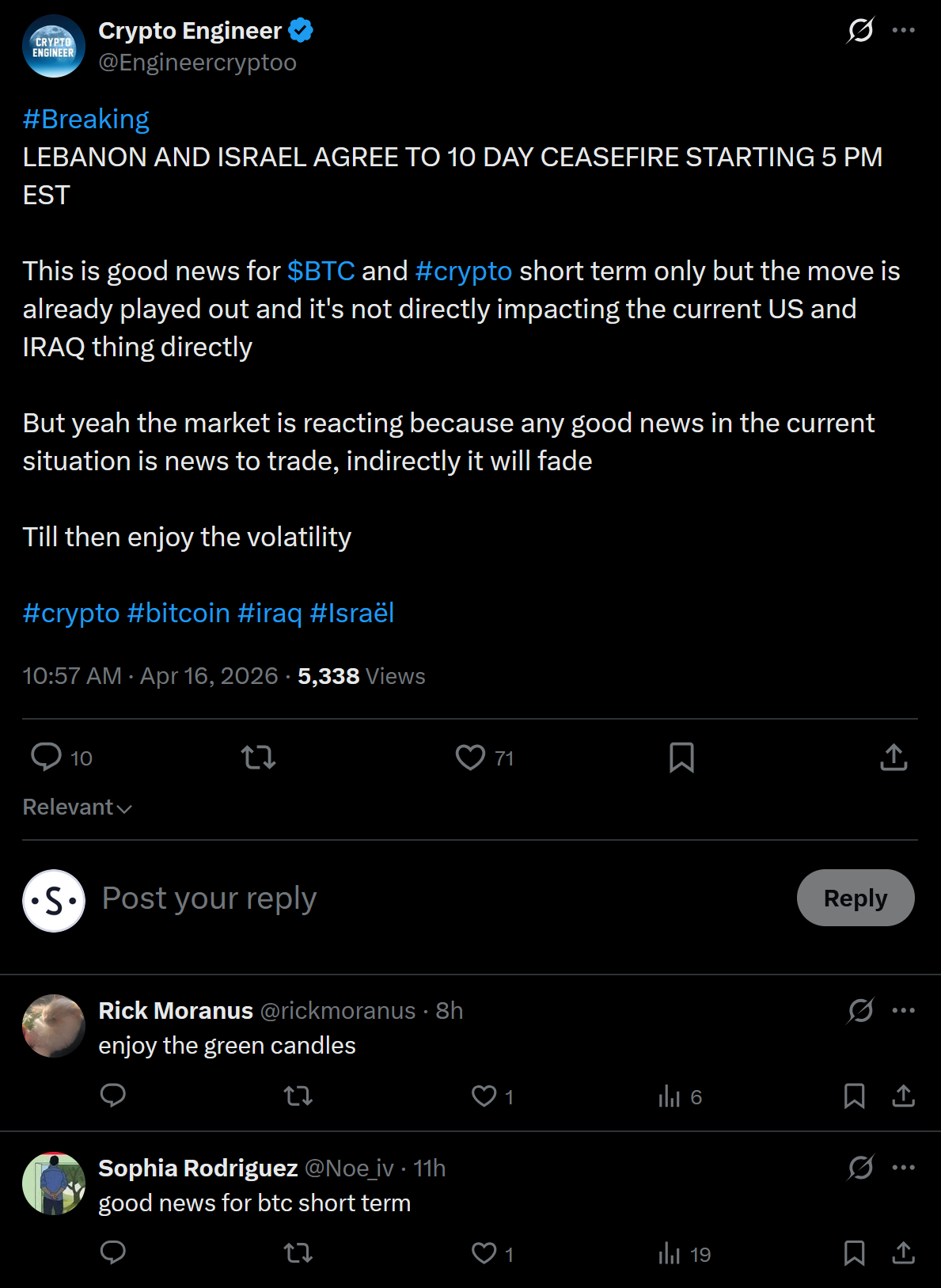
But traders also understand that markets tend to react positively to these headlines, even when they’re met with skepticism or suspicions of manipulation. In that sense, ceasefire announcements become less about whether individuals truly believe them, and more about how they expect others to respond. It turns into a second-order reaction, where price moves are driven not by conviction in the news itself, but by anticipation of how eager retail and institutional traders will chase the narrative.
And on cue with this announcement of a fresh ceasefire, the S&P 500 and Nasdaq rose to record highs for a second straight session, explicitly tying the move to optimism over the temporary Israel-Lebanon ceasefire and signs of possible U.S.-Iran diplomacy. Crypto reacted in the same general direction, though with its usual extra volatility. At the time of ths writing, Bitcoin is just above $75,000, which is a huge psychological support for many traders that were fearing a fall below just two months ago. Crypto tends to respond quickly when traders shift into “risk-on” mode, and the ceasefire headlines fit that pattern.
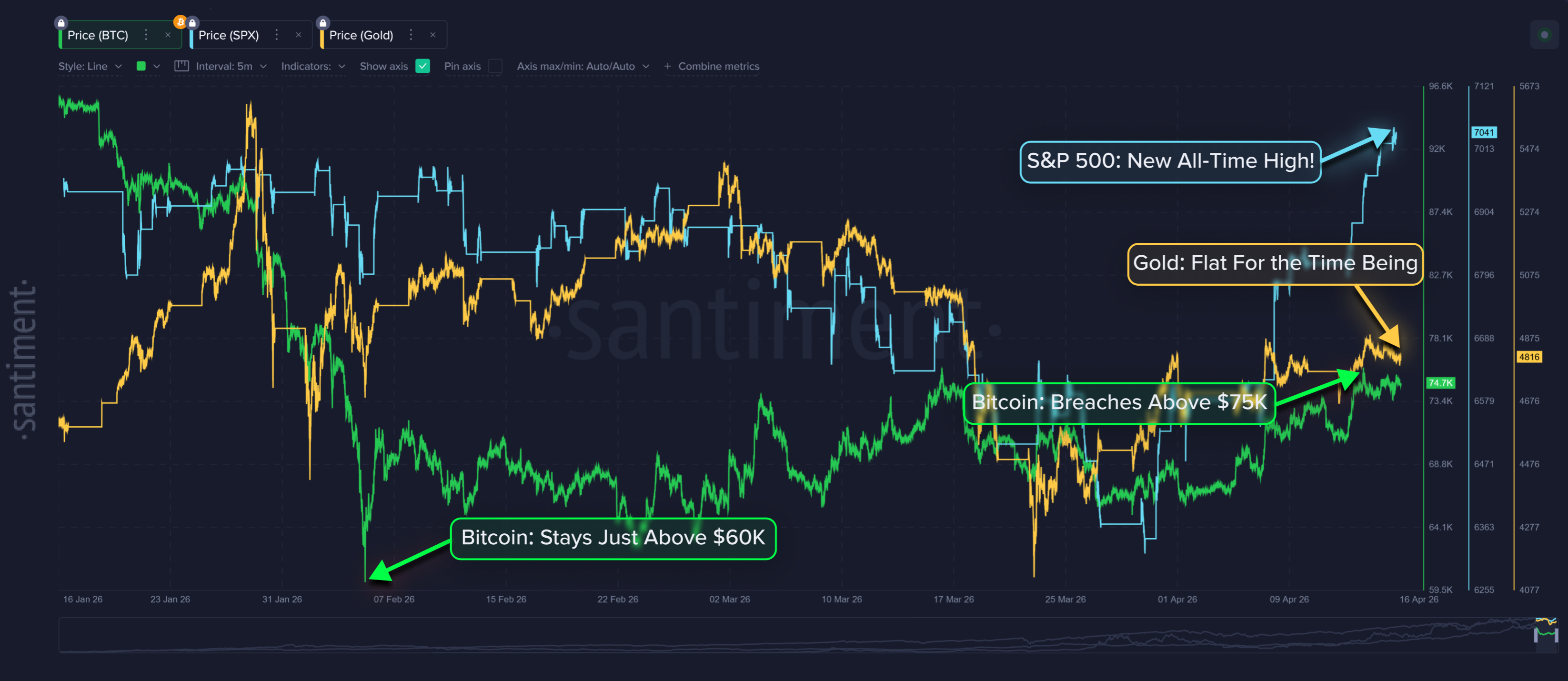
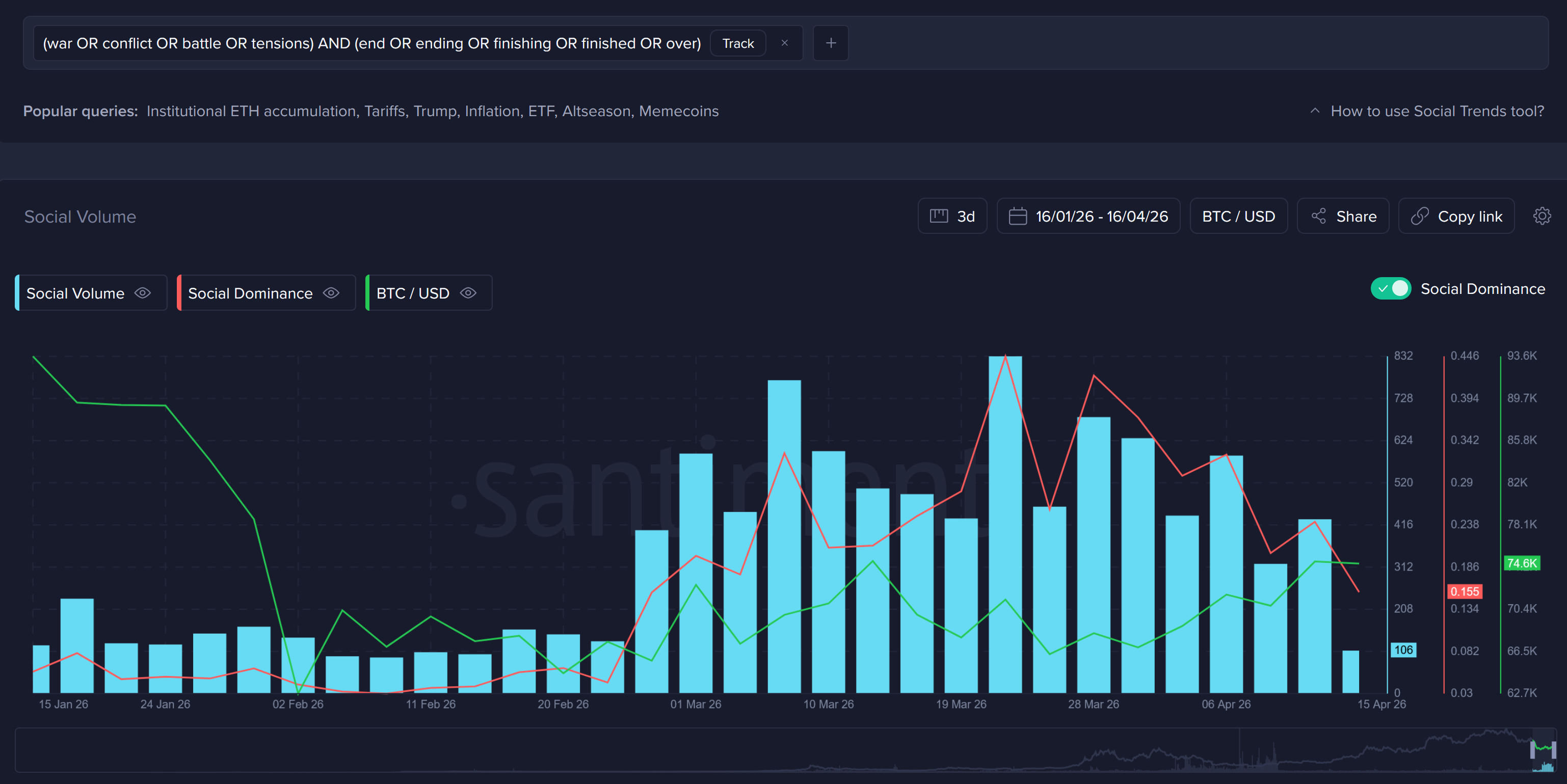
Still, the core lesson from late March through mid-April is that these rallies were sparked by ceasefire expectations, not by a fully solved war. Regardless, Trump’s ceasefire headlines clearly helped ignite crypto rallies and the S&P 500’s rebound, but they did so because markets kept betting that each new rumor, each restart in talks, and each temporary truce might finally become the turning point that ended the conflict for good. Want proof? Take a look at how much words like 'war', 'conflict', and 'battle' have combined with 'ending' or 'finished'. When the social volume and dominance of these specific discussions have risen, Bitcoin gradually has as well.
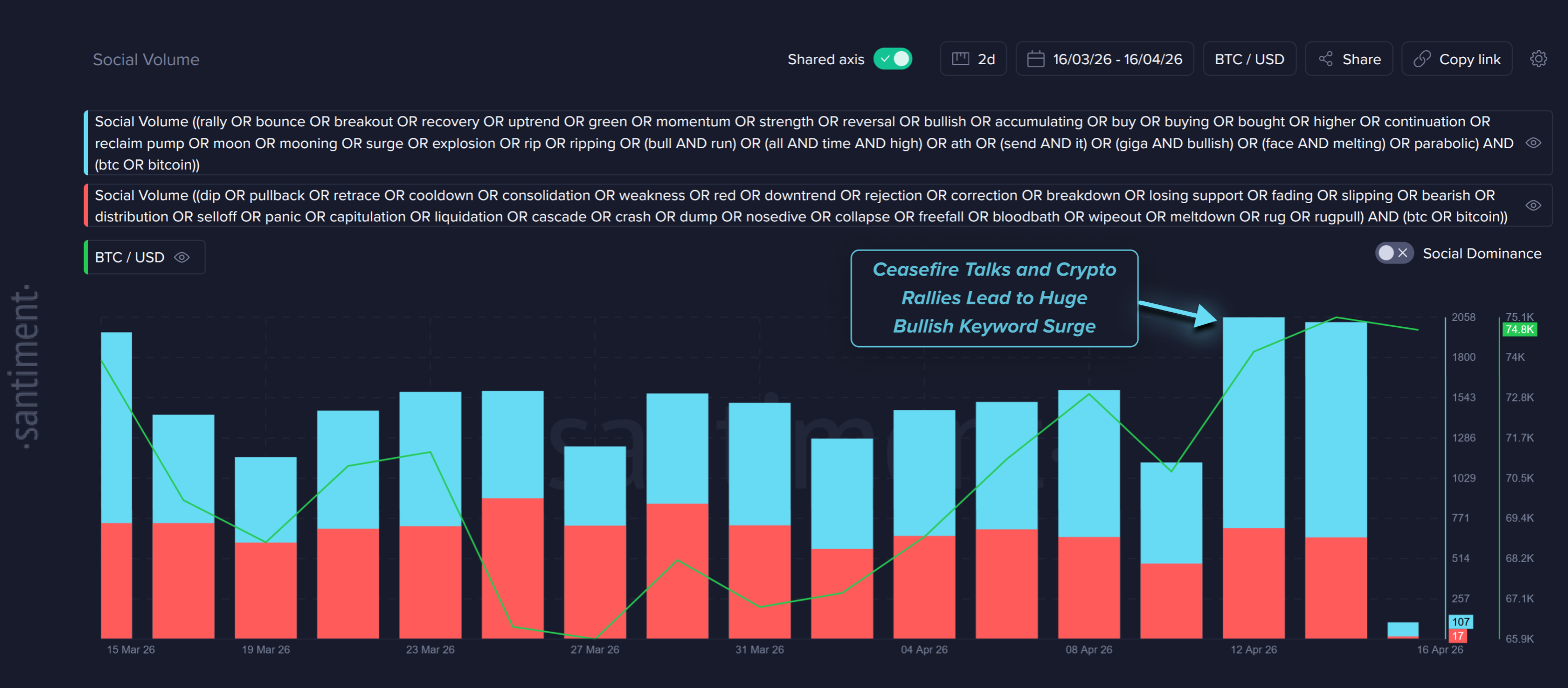
Further, take a look at how large of a gap there now is between the key bullish vs. bearish keywords we track, when it comes to discussions about Bitcoin. At the start of the week, when crypto soared on more ceasefire rumors, words like 'rally' and 'recovery' began to surge, while negative words like 'dump' and 'rugpull' stayed dormant.
As markets are likely setting up to finish the week positively, there should be a tinge of concern over how optimistic the crowd is getting that this war is reaching its conclusion. Every time a mass report comes out that tensions are winding down in the middle east and traders begin to relax and become more comfortable buying crypto, that's when a huge event occurs that causes a cascade back downward.
Regardless, the takeaway isn’t that traders should blindly trust or fade every ceasefire headline, but rather recognize the environment they’re operating in. As long as this cycle of optimism and disappointment continues, markets will likely remain highly reactive to every new development, real or rumored. That creates opportunity, but also risk, especially when sentiment becomes one-sided. In the near term, continued diplomatic progress could keep supporting crypto and equities, but if history over the past several weeks is any indication, it may only take one breakdown in talks to quickly unwind that optimism and remind traders just how fragile this narrative still is.
-----
Free two-week trials to Sanbase PRO (to access all mentioned Santiment data in this article, and plenty more) are AVAILABLE HERE!
-----
Disclaimer: The opinions expressed in the post are for general informational purposes only and are not intended to provide specific advice or recommendations for any individual or on any specific security or investment product.