Deep Dive: RLUSD Moves DEEPER Into Institutional Finance

Crypto has spent years trying to convince banks that blockchain-based money can work inside the traditional financial system. Now one of the world’s largest international banks is taking a meaningful step in that direction with Ripple’s stablecoin.
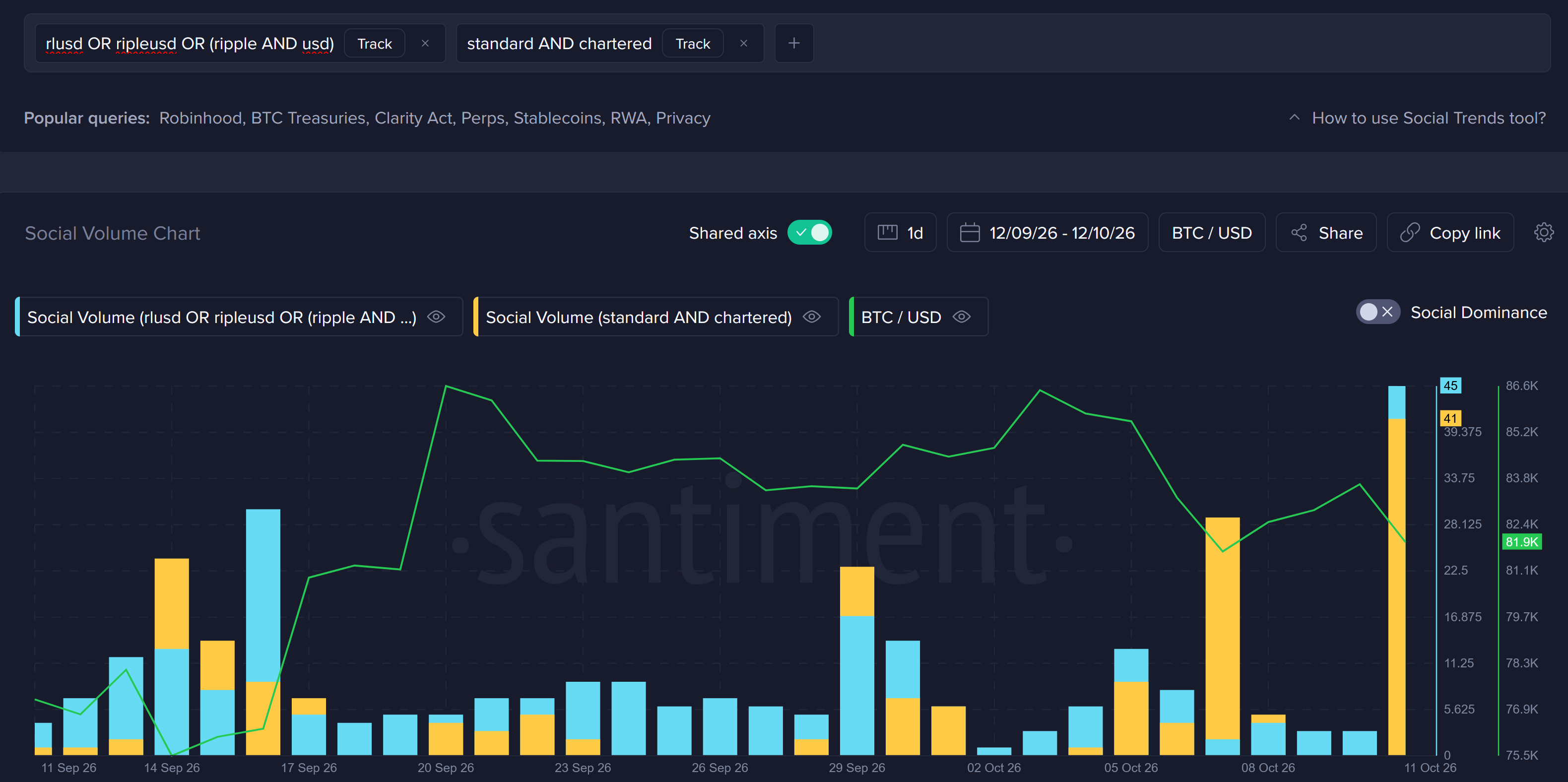
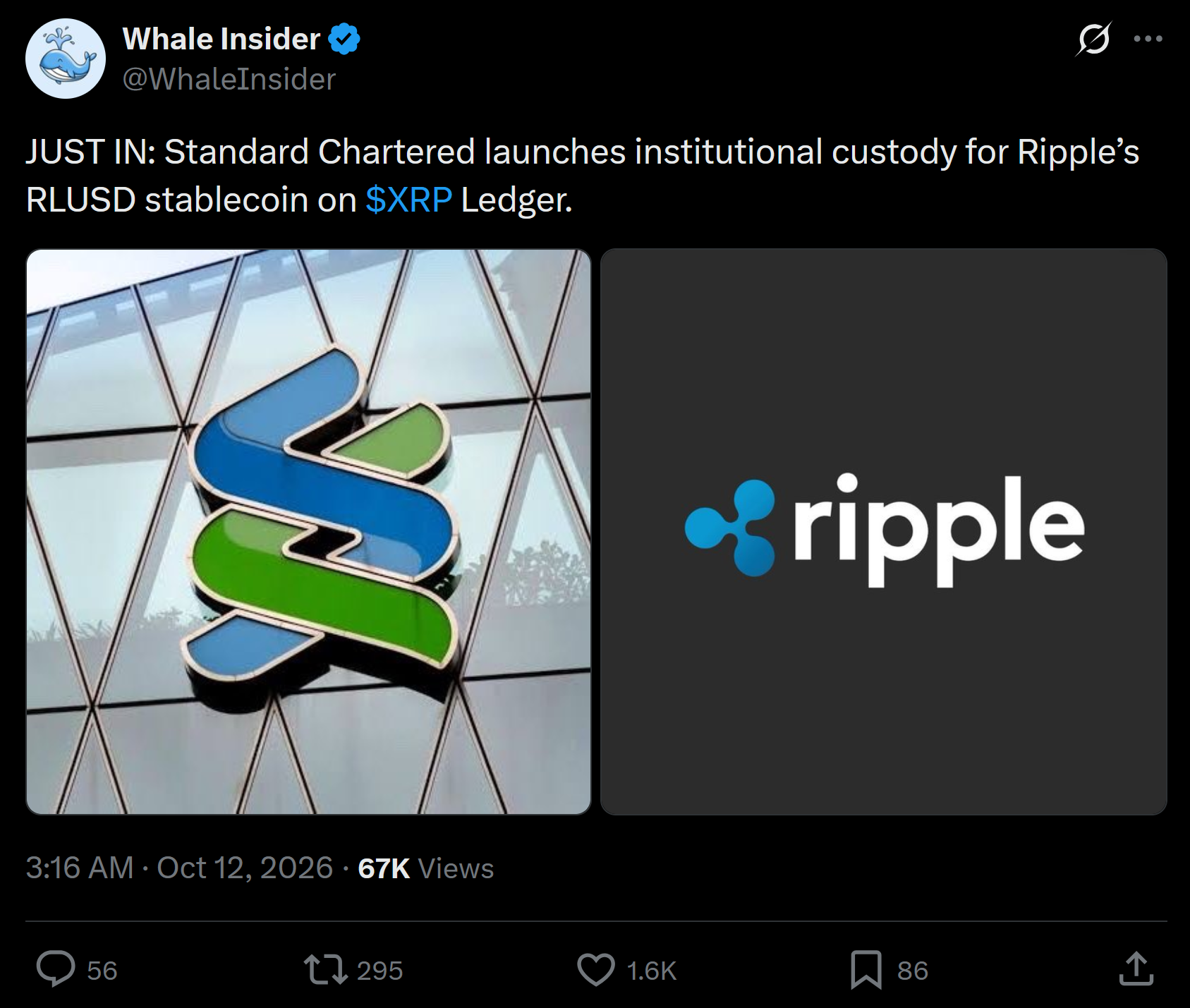
Standard Chartered has launched institutional custody for Ripple USD, better known as RLUSD, through its Dubai branch. In simple terms, large financial firms can now hold RLUSD with a major regulated bank rather than relying only on a crypto exchange or specialized digital-asset custodian. For a stablecoin that is still relatively new, that is a significant upgrade in credibility.
The timing also stands out. RLUSD has grown into a roughly $2.4 billion to $2.5 billion asset, while Ripple, Standard Chartered, LMAX Group and OKX are increasingly showing up in the same institutional conversations. What is taking shape is more than a single partnership. It is the beginning of a financial network where stablecoins can be held by banks, used for trading, and potentially moved through markets without institutions needing to leave familiar financial infrastructure.
Why Standard Chartered’s Name Carries Weight
If you’re relatively new to the crypto scene, Standard Chartered may not sound as familiar as Coinbase, Binance or JPMorgan. But it is a major global bank that works heavily with large companies, institutions and international markets. That makes its involvement with RLUSD very different from another exchange simply adding support for the token.
The bank is now allowing eligible institutional clients to custody RLUSD issued on the XRP Ledger. Custody simply means securely holding the asset on behalf of the client. In traditional finance, institutions usually do not want their traders personally managing private keys or keeping billions of dollars in crypto wallets. They want regulated systems, formal controls and clear accountability.
That is where Standard Chartered comes in. If an investment firm, trading company or financial institution wants exposure to RLUSD, it now has the option of keeping that asset with a bank it may already trust for other financial services. That could remove one of the practical barriers that has kept some institutions away from stablecoins.
Holding RLUSD Is Only the First Step
The more interesting part may come next.
Standard Chartered, Ripple and LMAX Group are working on a system that could allow institutions to use RLUSD as trading collateral. Collateral is simply an asset set aside to support a trade or position. Traders might use cash, government bonds or other assets as collateral today. RLUSD could eventually join that list.
The planned setup could allow an institution to keep RLUSD safely stored with Standard Chartered while LMAX recognizes that value for trading purposes. In other words, the institution may not need to constantly transfer the stablecoin back and forth between the bank and the trading platform.
That could save time and reduce risk. Moving assets between platforms introduces extra steps, delays and opportunities for mistakes. A system where RLUSD stays with a trusted bank while still being usable for trading could make the stablecoin far more attractive to professional investors.
There is one key limitation, though. The LMAX collateral integration is planned, not live yet. It still needs final testing, approvals and other operational work before institutions can fully use it that way.
Ripple Has Been Building Toward This for Months
The LMAX connection did not appear out of nowhere. Earlier this year, Ripple committed $150 million in financing to LMAX as part of a longer-term partnership focused on institutional crypto trading.
The original idea was to make RLUSD more useful across areas like spot trading, perpetual futures and other professional trading products. Today’s Standard Chartered announcement adds another important layer to that plan.
Instead of forcing institutions to move funds into unfamiliar crypto systems, Ripple is helping build connections between banks, trading venues and blockchain assets. That is the kind of setup large financial firms are usually much more comfortable using.
For crypto investors, the interesting part is not simply that another company “supports RLUSD.” It is that RLUSD is being designed to behave more like a piece of financial infrastructure rather than just another token people buy and sell.
The OKX Deal Shows the Same Players Are Connecting
Only days before the custody announcement, several of the same institutions showed up in another important deal.
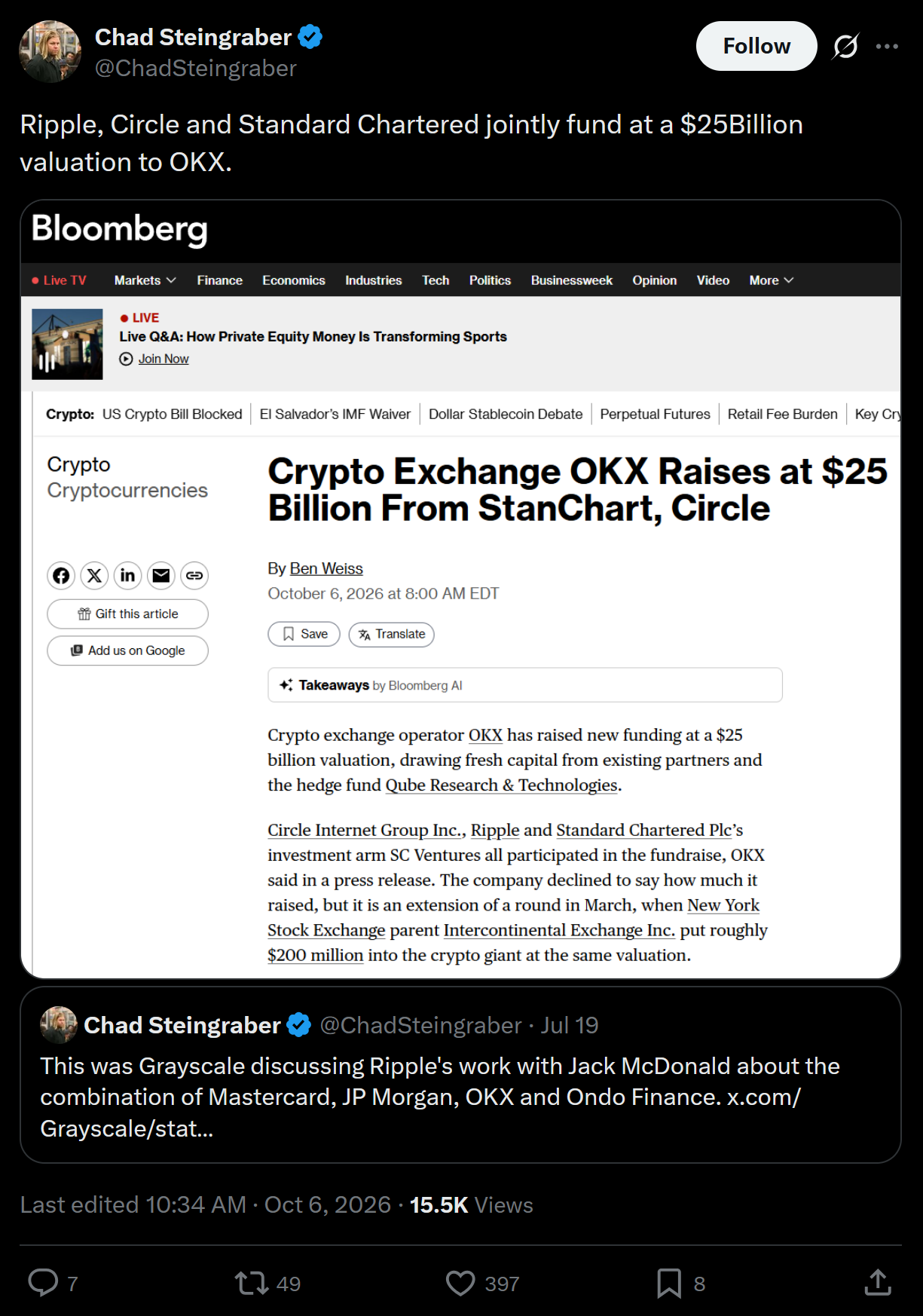
OKX announced a new investment round involving Ripple, Circle, Qube Research & Technologies and SC Ventures, Standard Chartered’s venture arm. The round valued OKX at $25 billion before the new investment.
That wording is important. Ripple, Circle and Standard Chartered did not invest $25 billion into OKX. The company itself was valued at $25 billion, while the exact size of the new investment was not publicly disclosed.
Still, the lineup says a lot. Ripple is building RLUSD. Circle runs USDC. Standard Chartered is providing banking and custody infrastructure. OKX operates one of the largest crypto trading platforms. When companies from different parts of finance keep investing in and partnering with one another, it suggests the industry is moving toward a more connected institutional system.
RLUSD Is Becoming Too Large to Ignore
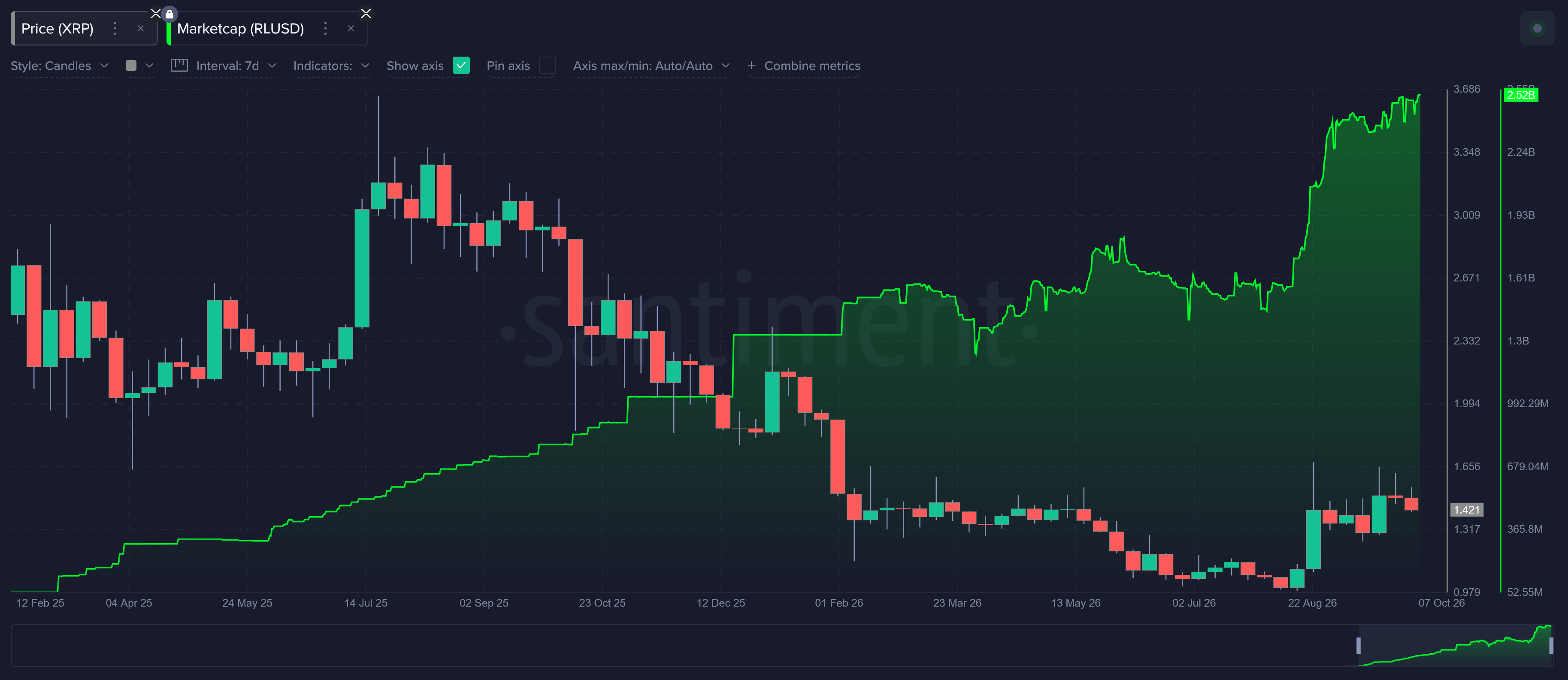
RLUSD has grown quickly for a stablecoin that launched relatively recently. Its market cap has climbed toward roughly $2.5 billion.
For a normal cryptocurrency, market cap growth often happens because the token price goes up. Stablecoins work differently. RLUSD is designed to stay near $1, so growth usually means more RLUSD has entered circulation.
That gives investors a different question to ask. Instead of wondering whether RLUSD can “moon,” the more useful question is whether people and institutions are actually using more of it.
The answer appears increasingly positive. RLUSD is being positioned for payments, settlement, trading liquidity and potentially collateral. The larger it becomes, the more useful it can be inside financial markets, assuming that supply is supported by real demand.
Does RLUSD Growth Automatically Make XRP More Valuable?
No, not directly.
RLUSD and XRP are two different assets with different purposes. RLUSD is a dollar-backed stablecoin designed to stay close to $1. XRP is a floating-price cryptocurrency used as the native asset of the XRP Ledger.
The below Santiment chart shows this separation clearly. RLUSD’s market cap rose sharply while XRP’s price moved lower. If RLUSD growth automatically pushed XRP higher, the two would be moving together much more closely.
That does not mean RLUSD is irrelevant to XRP. There is still a reasonable bullish argument, but it is more indirect.
If more banks, institutions and trading firms use RLUSD on the XRP Ledger, they are also interacting with the network where XRP is the native asset. More activity could mean deeper liquidity, more transactions, more applications and more institutional interest in the XRP ecosystem.
The Stronger XRP Bull Case Is About Usage
Some XRP bulls may be tempted to focus on transaction burns. Every transaction on the XRP Ledger uses a tiny amount of XRP as a fee, and that XRP is permanently removed from circulation.
But the amounts are very small. Even if RLUSD activity grows significantly, fee burns alone are unlikely to create major XRP price pressure.
The more interesting argument is economic activity. If RLUSD becomes useful to banks and institutions, and much of that activity happens on XRPL, the network itself becomes more valuable as financial infrastructure.
That could eventually support XRP in several ways. More liquidity could make XRP easier to trade. More institutions may become familiar with the asset. XRP could also remain useful as a bridge between different currencies and assets moving through the network.
That is a much stronger long-term argument than simply saying RLUSD market cap goes up, therefore XRP must go up too.
The Bearish Case: Ripple Can Win Without XRP Winning
There is also an important downside to the XRP argument.
RLUSD is not limited to the XRP Ledger. Ripple has expanded it to other blockchain networks, which means RLUSD can succeed even if some of its growth happens somewhere else.
An institution could use RLUSD without buying XRP. A trading firm could hold RLUSD as collateral without speculating on XRP. And a bank could support Ripple’s stablecoin without necessarily creating major demand for XRP itself.
The planned LMAX integration is also still unfinished. Standard Chartered custody is live today. The collateral system is not.
That makes it easy for social media excitement to move faster than the actual product. Institutional adoption often happens slowly, with months of testing and compliance work behind the scenes.
The Bigger Story Is That Crypto Is Becoming Less Separate From Banking
For years, crypto and traditional finance were treated like two different worlds. Banks handled dollars, bonds and traditional assets. Crypto exchanges handled tokens.
That wall is gradually weakening.
A bank can now hold RLUSD. A trading venue may eventually accept that RLUSD as collateral. Ripple, Circle and Standard Chartered are investing alongside one another in crypto infrastructure. The stablecoin itself has grown into a multi-billion-dollar asset.
None of those developments guarantee XRP will rise. But together, they show that the line between blockchain markets and traditional finance is becoming harder to see.
Conclusion
Standard Chartered’s RLUSD custody launch is important because it makes the stablecoin easier for institutions to use in a way they already understand. Instead of asking a professional investment firm to completely change how it stores and manages assets, RLUSD can now fit inside a regulated banking relationship.
The next stage will be even more important to watch. If RLUSD becomes widely used as collateral, settlement money and institutional liquidity, its role could grow far beyond being another stablecoin sitting in wallets.
For XRP investors, the opportunity is real but indirect. RLUSD becoming successful could bring more institutions onto the XRP Ledger and increase activity across the ecosystem. But XRP still needs its own demand, liquidity and use cases to benefit.
The strongest signal will not simply be RLUSD crossing another market-cap milestone. It will be seeing banks, trading firms and financial platforms actually use the XRP Ledger more because RLUSD exists.
-----
Free two-week trials to Sanbase PRO (to access all mentioned Santiment data in this article, and plenty more) are AVAILABLE HERE!
-----
Disclaimer: The opinions expressed in the post are for general informational purposes only and are not intended to provide specific advice or recommendations for any individual or on any specific security or investment product.