Binance vs Bybit: The Two Largest Hacks Compared


On October 29, 2026, attackers took roughly $6.3 billion from Binance hot wallets across ten blockchains, most of it inside about twenty minutes. It is the largest theft in crypto history, and is “almost certainly the single largest known theft of any kind,” according to blockchain analytics firm Elliptic. Twenty months earlier, on February 21, 2025, the same group took $1.46 billion in ETH from a single Bybit cold wallet. Until October 2026, that was the record. The FBI has now attributed both to TraderTraitor, the North Korean cluster also tracked as Lazarus Group.
Bybit survived it. No customer lost money, withdrawals were never suspended, and 96 days later an EU regulator granted the exchange a MiCA license. The damage was commercial rather than existential, and almost none of the stolen money ever came back.
That makes Bybit quite a good reference point for analyzing what might happen to Binance and the market next. So, what did those three months post-hack actually look like, was it even that bad, and how much of it should we expect to repeat? As a bonus, I also touch on FTX and the categorical difference between that event and these two hacks.
Side by Side
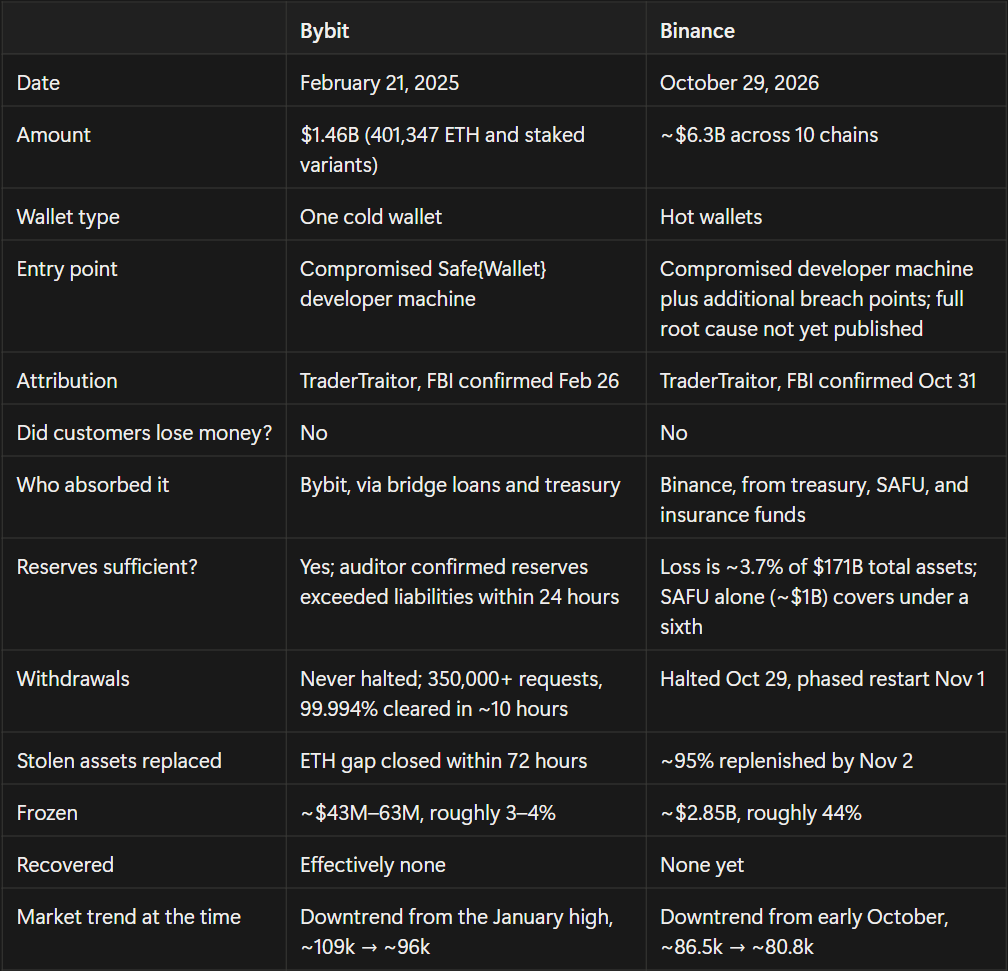
Market Impact and Sentiment Analysis
Binance holds $171B by its own proof of reserves and takes close to 39% of spot volume across the top ten exchanges, according to CoinGecko. Bybit was running about 11% across the top twenty in the days before it was hacked, per Block Scholes. That difference matters because a Binance hack touches a much larger part of the market directly. That gave the story a much better chance of moving sentiment. Was that true? Well…sort of.
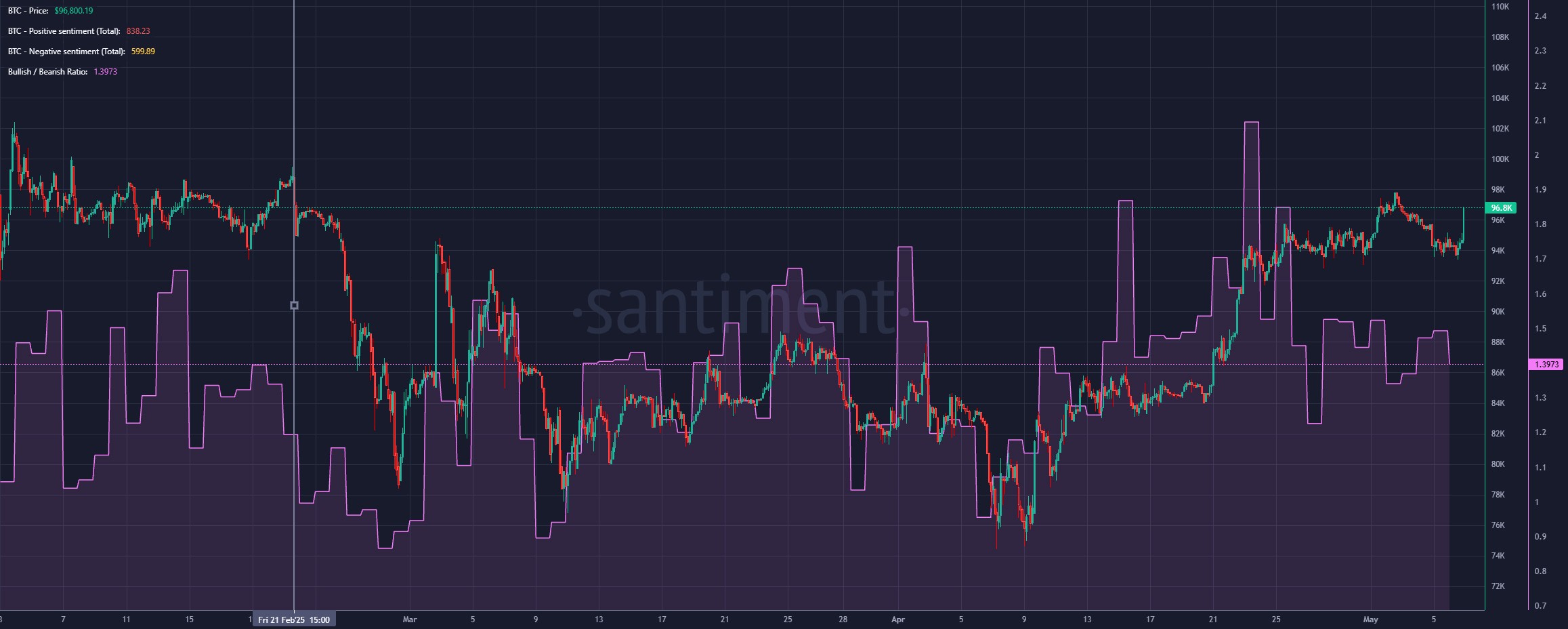
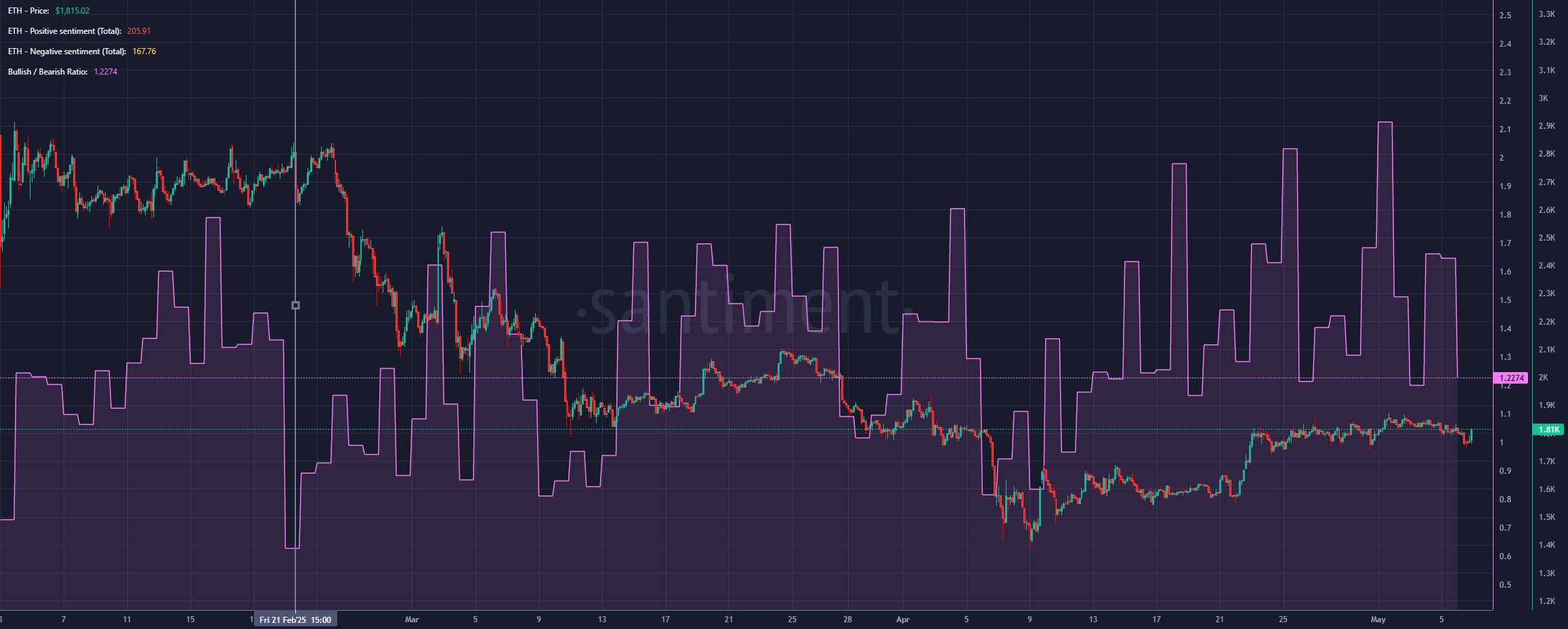
On February 21, 2025, the day 401,347 ETH was stolen from Bybit, ETH ran 0.63 bullish comments for every bearish one, down from 1.36 the day before — bearish mentions more than tripled. BTC barely moved, slipping from 1.34 to 1.19, and drifting to an even 1.00 the day after.
The Binance hack moved both. BTC went from 1.03 bullish per bearish on October 28 to 0.76 on October 29. ETH went from 1.5 to 0.89. Then on October 30 both printed remarkably bad readings: 0.45 for BTC and 0.35 for ETH, more than two bearish comments for every bullish one. Bearish BTC mentions that day ran 2.4 times their level two days earlier.
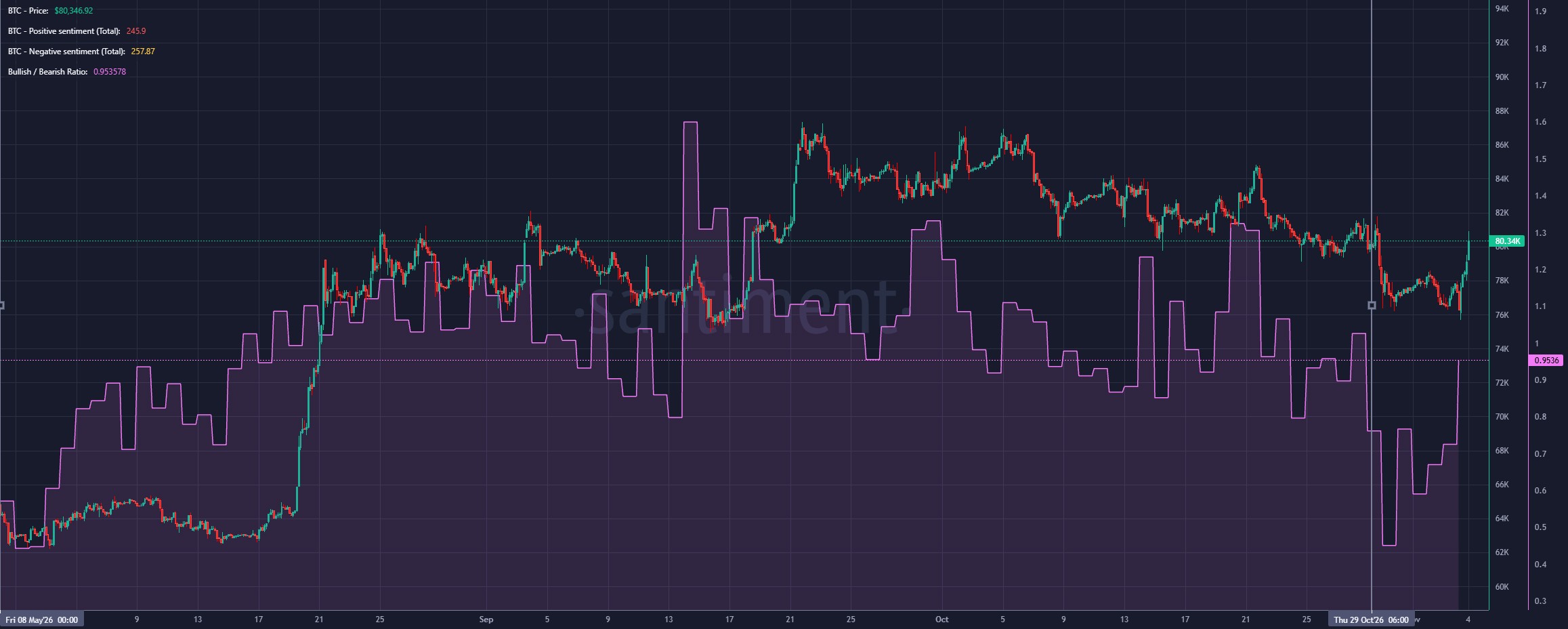
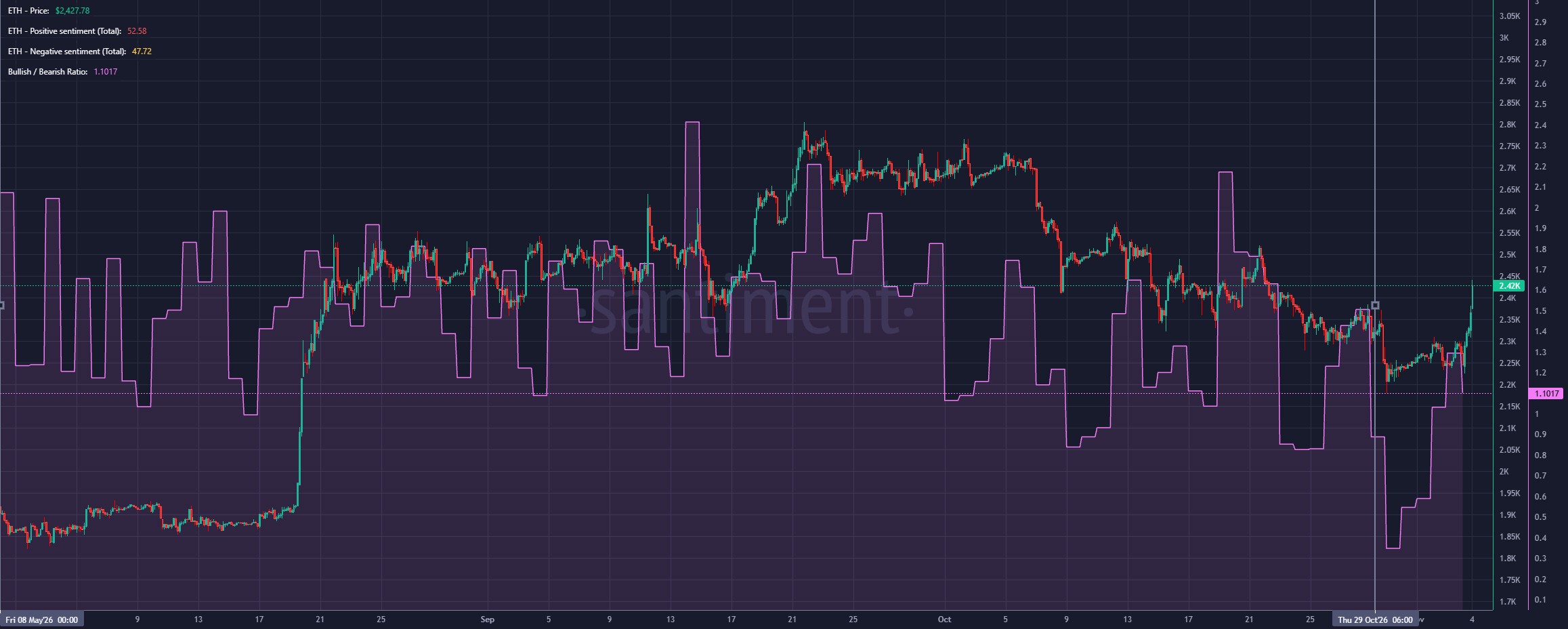
Ratios are bullish mentions divided by bearish mentions, from Santiment’s positive and negative sentiment metrics at daily resolution. Counts rounded.
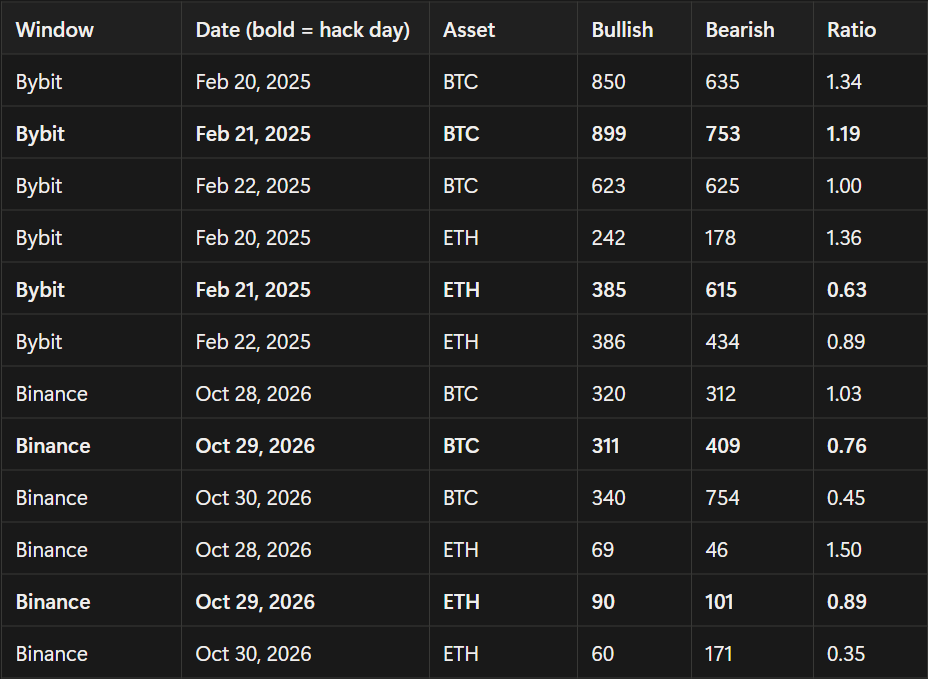
So the crowd did react to Bybit — but only about the asset actually taken. BTC moved far less. The Binance reaction hit both assets. Unlike Bybit, Binance also suspended withdrawals, the single most visible signal of stress an exchange can send. Binance was also the far larger exchange with four times the loss, so the data suggests the crowd was pricing in both the loss of access as well as the scale of the hack itself.
The Binance hack moved price less than the actual sentiment. BTC fell from $81.2k to $77.8k between October 28 and 29, down 4.2%, with ETH down 4.6%. As of November 3, BTC sits at ~$77.8k and has not recovered. Remember to also factor in: the Fed held rates on October 28 with two members dissenting in favor of a hike, September PCE and Q3 GDP both printed on October 29, and a broad AI-led equity selloff ran through the same week. We can attribute the single-day move to the hack, since BTC was trading above its October 28 close as late as 15:00 UTC and only fell after the theft began at 20:05, but not the week or the overall trend.
In contrast, the news around Bybit pushed in both directions at once. February 21, 2025 was the worst US equity session of the year to that point, with the Dow down 748 points, the S&P 500 down 1.7%, and the Nasdaq down 2.2%, after consumer sentiment was revised to 64.7 from January’s 71.7 and year-ahead inflation expectations jumped to 4.3% from 3.3%. Pulling the other way, the SEC agreed that same week to drop its enforcement case against Coinbase, formally dismissed on February 27. Risk-off macro events amplify bearish comment volume, while major regulatory wins amplify bullish comment volume. Additionally, unlike the Binance data, there is no clean moment separating the hack from everything else happening around it. So the Bybit reading is the harder of the two to trust.
What FTX Was, and Why It Is the Wrong Comparison
FTX is a tempting comparison, but it’s different. Firstly, FTX wasn’t hacked. Their customers were victims of a massive $8 billion fraud, perpetrated by the head of the exchange. Customers waited two years and three months to be paid at November 2022 prices, when BTC was near $17,000 — whole in dollars, but a fraction of what those assets went on to be worth. The failure spread: Genesis froze withdrawals, BlockFi filed for bankruptcy, Silvergate wound down and Signature Bank was seized by regulators, and the government noticeably became more anti-crypto. In comparison, neither Bybit nor Binance customers suffered any losses, and rivals who lent into Bybit were repaid within days.
What to Expect
After the Bybit hack, the market as a whole had a good three months. BTC traded near $96.6k in the days before the hack and reached about $109.7k three months later, a gain of roughly 13%. The worst stretch in between came in early April, when BTC fell to around $76.6k, seven weeks after the theft and on tariff news unrelated to it. ETH, the asset actually stolen, did worse, slipping from about $2,716 to $2,551, though it had been lagging BTC since before the theft and went on to triple off its April low, outpacing BTC across the rest of the year.
Neither hack can be cleanly separated from the trend it landed in. Both arrived during declines already underway, which means the defensible claim is not that these events had no effect, but that no lasting effect is detectable against everything else moving at the same time.
A reasonable expectation for Binance is the same pattern as what happened to Bybit at larger scale: no customer losses, a potential hit to volume and share, a long tail of unrecovered funds, and little lasting price effect attributable to the hack itself.
Price and sentiment data: Santiment